
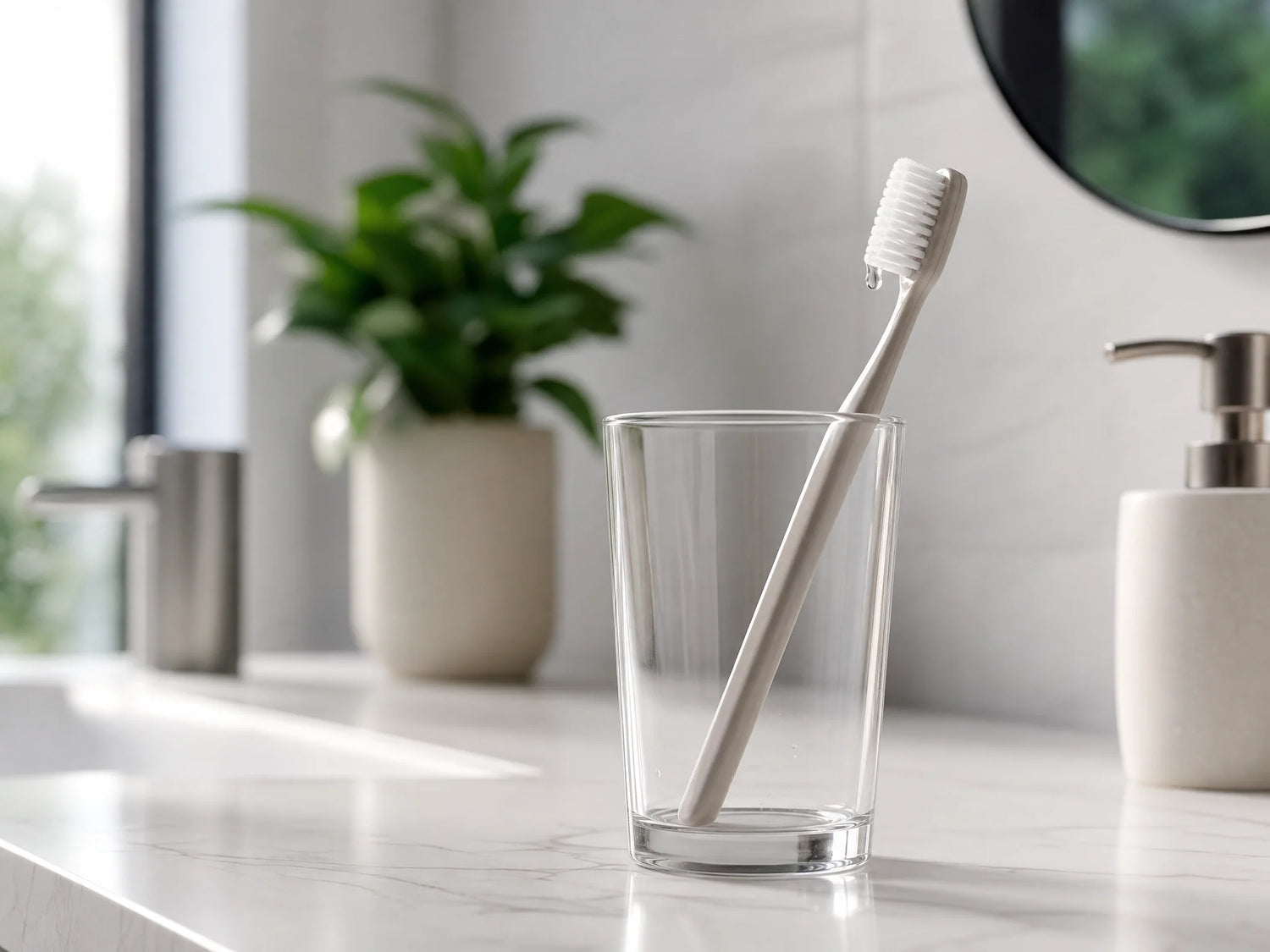
TL;DR : Bien que le système immunitaire de votre corps vous empêche généralement d'attraper exactement le même virus deux fois, une brosse à dents contaminée peut encore propager des germes aux membres de la famille ou provoquer une réinfection bactérienne. Remplacer votre brosse après une maladie est une étape simple et peu coûteuse pour garantir un nouveau départ. Si vous ne pouvez pas la remplacer immédiatement, une désinfection sûre peut aider—mais ce n'est pas un substitut parfait.

Vous avez enfin vaincu ce vilain rhume. Mais maintenant, vous regardez votre brosse à dents en vous demandant si c'est un ennemi caché. La réponse courte : cela dépend de la maladie. Votre brosse à dents peut devenir un réservoir de bactéries et de virus, mais que vous deviez la jeter dépend davantage de la protection des autres et de l'évitement de certaines réinfections bactériennes que d'attraper le même rhume deux fois. Décortiquons la science pour que vous puissiez faire un choix en toute confiance.
Pourquoi le remplacement de votre brosse à dents après une maladie est crucial
Une brosse humide et à poils est un terrain de reproduction parfait pour les microbes. Lorsque vous êtes malade, votre salive est chargée de particules infectieuses. Chaque fois que vous vous brossez, vous transférez ces germes sur les poils. La contamination de la brosse à dents n'est pas qu'une théorie—les virus comme la grippe peuvent survivre sur le plastique pendant 24 à 48 heures, et certaines bactéries peuvent se multiplier pendant des jours.
Statistique : Jusqu'à 80 % des brosses à dents peuvent héberger des bactéries pathogènes même chez les personnes en bonne santé, et une maladie active augmente considérablement cette charge microbienne.
Le cycle de réinfection : comment une brosse à dents contaminée peut vous rendre malade à nouveau
Le risque de réinfection ne concerne pas l'attrapage du même virus du rhume—votre corps a développé une mémoire immunitaire pour cette souche exacte. Le danger sournois fonctionne différemment :
- Vous vous brossez avec un outil chargé de pathogènes résiduels.
- Votre système immunitaire encore en convalescence peut être moins prêt à combattre une nouvelle agression.
- Pour les infections bactériennes comme l'angine streptococcique, les mêmes bactéries peuvent recoloniser, déclenchant une rechute complète.
- Les brosses partageant un porte-brosse peuvent transmettre des germes aux membres de la famille qui n'ont pas d'immunité.
Comme l'a dit le Dr Anne Clemons de la Cleveland Clinic, bien que la plupart des personnes en bonne santé courent un « risque très faible » de se réinfecter, « c'est un de ces cas où il vaut peut-être mieux être prudent que désolé. Ça ne peut pas faire de mal. »
Quand devriez-vous remplacer votre brosse à dents après avoir été malade ?
Toutes les maladies ne sont pas identiques. Ce tableau vous donne un plan clair et facile à consulter.
| Type de maladie | Recommandation de remplacement | Pourquoi |
|---|---|---|
| Rhume ou grippe courant (viral) | Remplacez-la dès que les symptômes sont complètement résolus | Les virus meurent en 24 à 72 heures ; vous ne vous réinfecterez pas, mais vous arrêtez la propagation aux autres. |
| Angine streptococcique ou infections bactériennes | Remplacez-la immédiatement au début des antibiotiques | Les bactéries peuvent survivre et se multiplier sur les poils, provoquant une réinfection. |
| COVID-19 ou infections virales graves | Remplacez-la après la fin de la période d'isolement | La transmission par fomite est possible ; protège les membres du foyer. |
| Infections buccales (boutons de fièvre, muguet, pied-main-bouche) | Remplacez-la après la disparition de l'infection active, puis à nouveau après le cycle de guérison | Le virus de l'herpès simplex et les champignons s'incrustent dans les poils et peuvent se réactiver. |
Après un rhume ou une grippe courante
Votre système immunitaire a fabriqué des anticorps contre le virus qui vous a terrassé. Les rhinovirus ou virus grippaux restants sur les poils mourront en un jour ou deux dans des conditions sèches. Le vrai danger est la contamination croisée. Si votre brosse touche un porte-brosse contenant d'autres brosses, remplacez toutes les brosses pour éviter de transmettre la maladie à ceux qui n'ont pas encore acquis d'immunité.
Après une angine streptococcique ou des infections bactériennes
C'est l'une des situations où les experts ne débattent pas : procurez-vous une nouvelle brosse. Le streptocoque du groupe A peut vivre et se nourrir sur une brosse humide, ce qui signifie que vous pouvez littéralement réapprovisionner l'infection chaque matin. Les dentistes interrogés par Dentistry IQ sont clairs : les patients devraient remplacer leur brosse à dents après une maladie bactérienne s'ils veulent éviter la réinfection.
Après la COVID-19 ou d'autres infections virales graves
Le SARS-CoV-2 peut persister sur le plastique jusqu'à 72 heures. Bien que la voie principale soit aérienne, un outil inséré dans la bouche mérite une attention particulière. Le CDC recommande de nettoyer les surfaces fréquemment touchées ; votre brosse à dents en fait partie. Après la fin de votre isolement, la retirer est une assurance bon marché pour votre foyer.
Après des infections buccales (boutons de fièvre, muguet, pied-main-bouche)
Pour les boutons de fièvre, le virus de l'herpès simplex peut résider dans les poils, et bien que votre corps le supprime généralement, juste après une poussée est le meilleur moment pour commencer avec une brosse propre. Avec le muguet buccal, les champignons Candida peuvent recoloniser votre bouche à partir des poils. Pour la maladie pied-main-bouche, le virus est excrété pendant des semaines — remplacez la brosse après la disparition de tous les symptômes et à nouveau une semaine plus tard par sécurité.
Combien de temps les germes peuvent-ils réellement vivre sur une brosse à dents ?
Une brosse à dents humide dans une salle de bain chaude est un hôtel cinq étoiles pour les microbes. Voici ce que la recherche nous dit sur les temps de survie :
- Virus de la grippe : 24 à 48 heures
- Rhinovirus (rhume courant) : jusqu'à 24 heures
- Staphylococcus aureus : jours à semaines
- E. coli : heures à jours
- Bactéries Streptococcus : peuvent survivre et se multiplier indéfiniment sur une brosse humide
Ces germes ne restent pas seulement en surface—ils forment un biofilm qu'un simple rinçage ne peut pas éliminer.

Que se passe-t-il si vous ne changez pas votre brosse à dents lorsque vous êtes malade ?
- Maladie prolongée : Les infections bactériennes peuvent s'éterniser si vous réintroduisez continuellement le pathogène.
- Transmission à la famille : Les brosses qui se touchent dans un porte-brosse peuvent transmettre la grippe ou le streptocoque à votre partenaire ou à votre enfant.
- Infections secondaires : Un environnement buccal affaibli permet aux bactéries responsables de la gingivite de proliférer, entraînant une inflammation des gencives.
- Dommages aux poils : Un brossage excessif en étant malade use les poils, les rendant moins efficaces et plus durs pour les gencives sensibles.
Comment désinfecter correctement une brosse à dents (si vous ne pouvez pas la remplacer immédiatement)
Tout le monde ne peut pas se procurer une nouvelle brosse à 2 heures du matin. Ces solutions temporaires réduisent la charge microbienne—mais rappelez-vous, elles ne sont pas aussi infaillibles qu'un remplacement.
Méthodes de désinfection sûres qui fonctionnent réellement
- Trempage dans un bain de bouche antibactérien: Immergez la tête dans un bain de bouche à base d'alcool pendant au moins 2 minutes. Rincez abondamment.
- Trempage dans du peroxyde d'hydrogène à 3 % : Laissez les poils tremper dans du peroxyde pendant 10 minutes, puis rincez. Cela tue les bactéries et les virus.
- Désinfecteur UV-C: Un désinfecteur de brosse à dents dédié utilise la lumière ultraviolette pour détruire l'ADN microbien. Suivez les instructions de l'appareil (généralement un cycle de 5 à 10 minutes).
- Eau bouillante (extrême prudence) : Trempez uniquement la tête dans l'eau bouillante pendant 30 secondes. La chaleur élevée peut déformer les poils en nylon, les rendant abrasifs—à n'utiliser qu'en dernier recours.
Les mythes sur le nettoyage des brosses à dents et les méthodes à éviter
Avertissement : Ne mettez jamais votre brosse à dents au micro-ondes—elle peut fondre ou produire des étincelles. Le lave-vaisselle peut déformer les poils et les manches, créant des bords tranchants. De plus, un trempage dans l'alcool au-delà du temps recommandé risque de dégrader le matériau.
Évitez : - Micro-ondes — risque d'incendie et poils ruinés. - Lave-vaisselle — la chaleur excessive endommage le nylon et laisse un goût étrange. - Ébullition prolongée — détruit la forme de la brosse, nuisant aux gencives.
À quelle fréquence faut-il remplacer une brosse à dents dans des conditions normales ?
Même en bonne santé, l'American Dental Association (ADA) conseille de remplacer votre brosse à dents tous les 3 à 4 mois. Les signes visibles sont des poils effilochés, écartésou aplatis . Une brosse usée ne nettoie pas efficacement et peut rayer l'émail. La maladie accélère simplement ce délai.
L'endroit où vous rangez votre brosse à dents compte pour l'hygiène à long terme
Une brosse propre peut rapidement être contaminée si elle est mal rangée. Suivez ces règles de placement :
- Rangez-la verticalement pour laisser l'air circuler et l'eau s'écouler complètement.
- Gardez-la à au moins 1,8 mètre des toilettes — la chasse d'eau peut vaporiser des micro-gouttelettes qui atterrissent sur les poils.
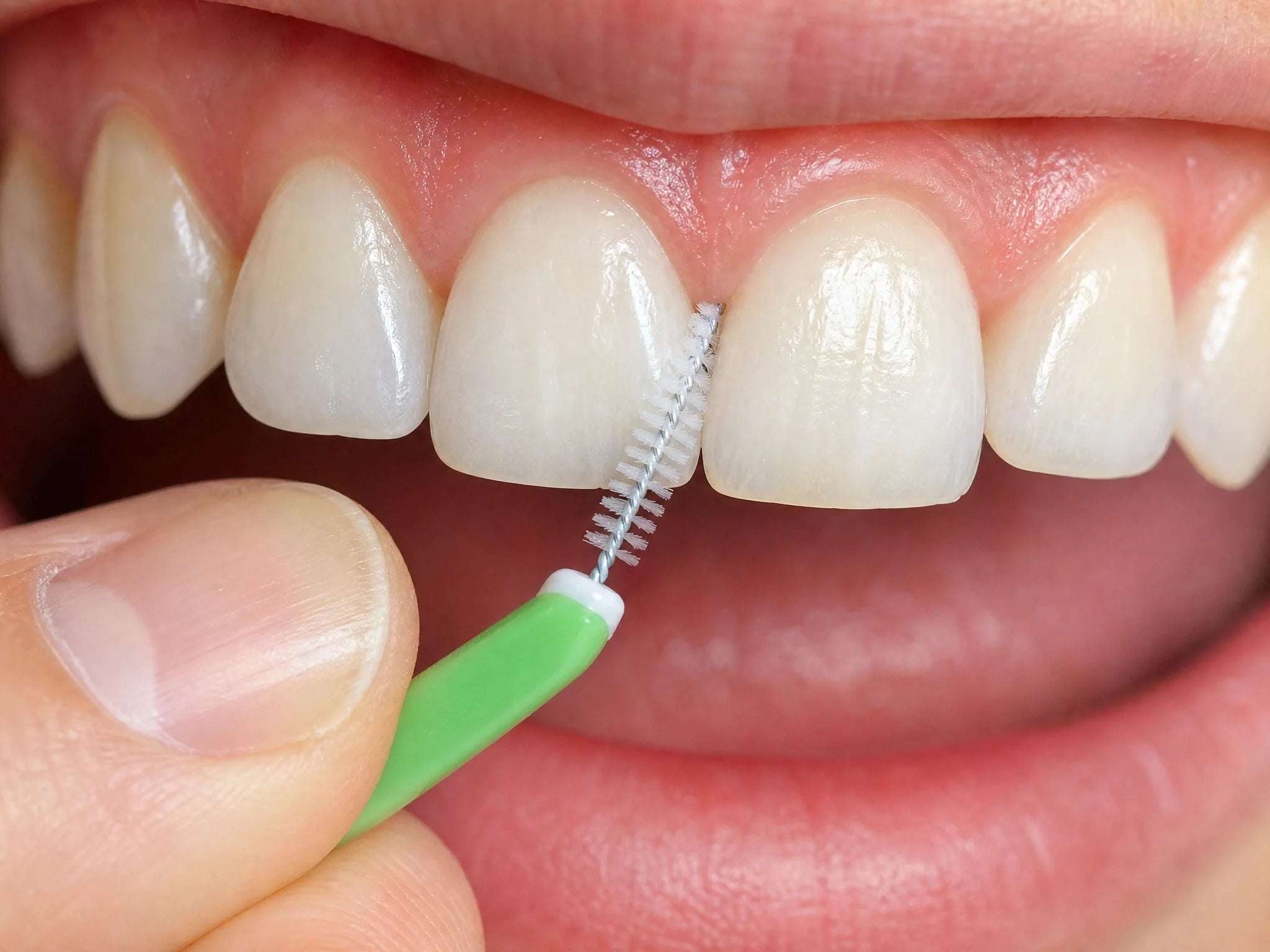
- Séparez les têtes de brosse afin qu'ils ne touchent pas les autres dans un porte-brosse partagé.
- Laissez-la sécher complètement à l'air libre avant de la recouvrir ; une tête humide favorise la prolifération des bactéries.
Choisir la bonne brosse à dents pour la récupération après une maladie
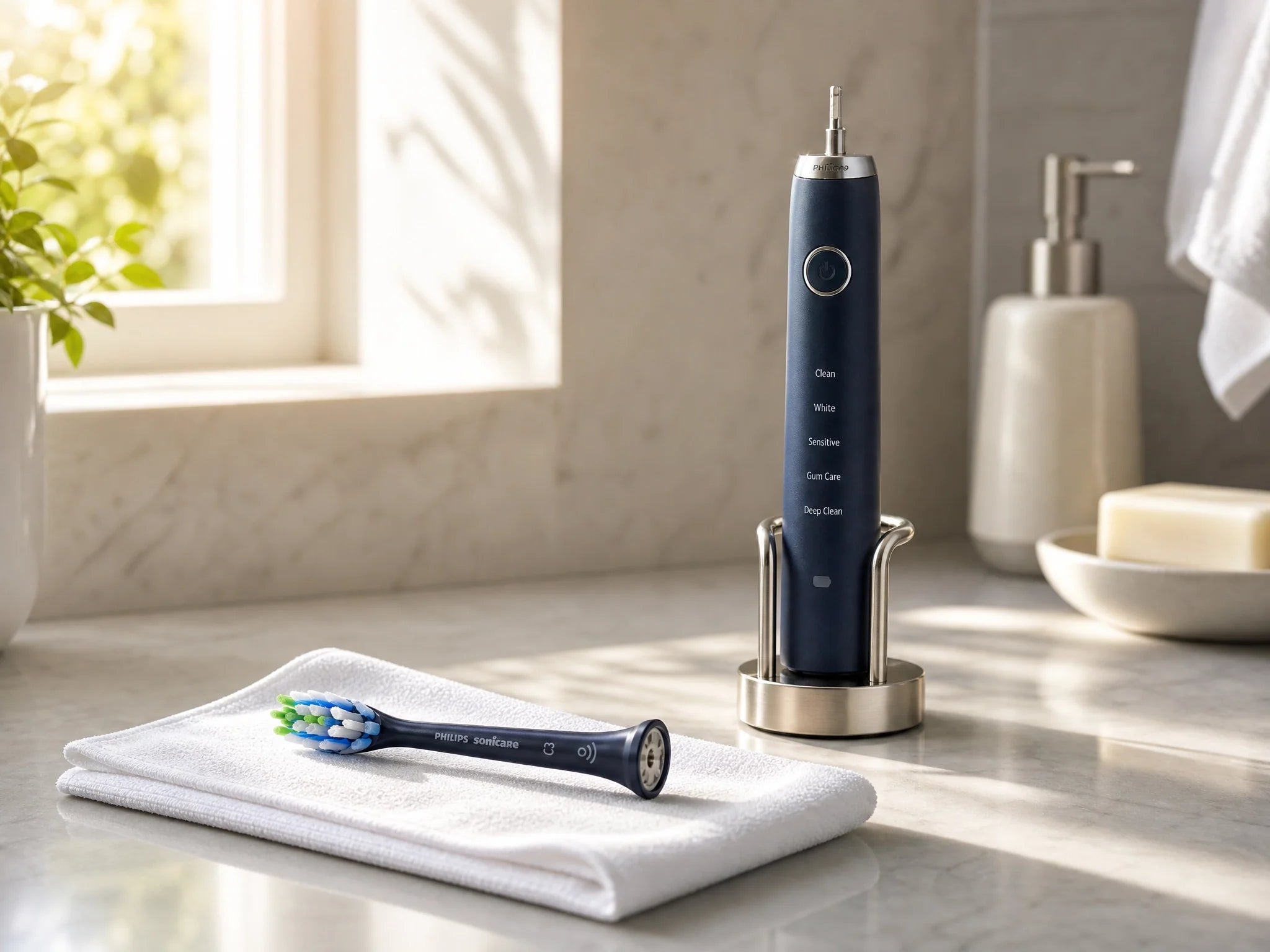
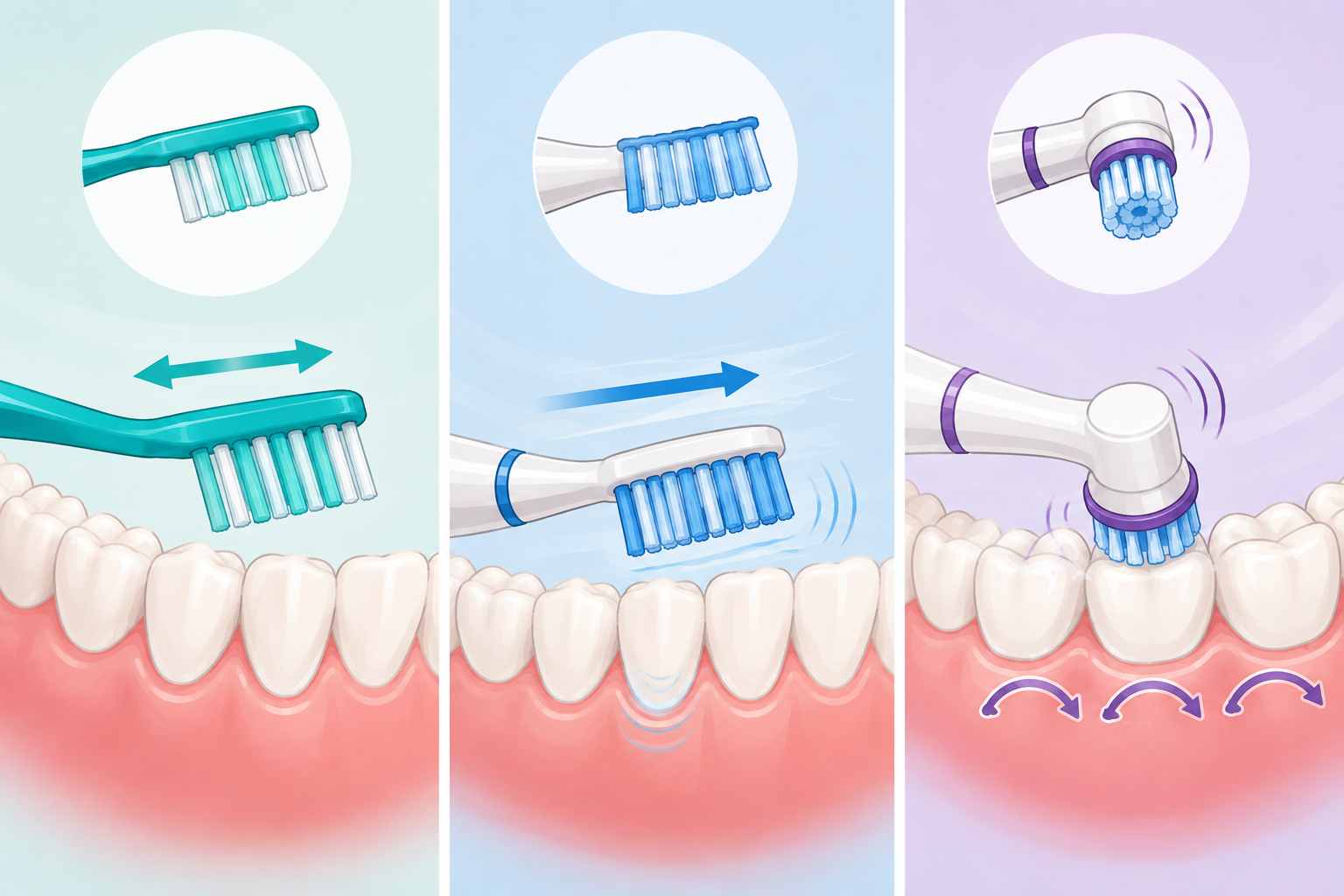
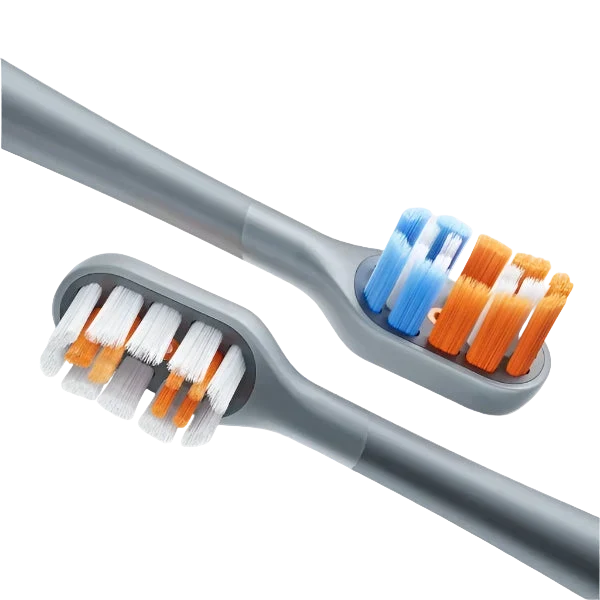
Lorsque vous achetez cette nouvelle brosse, vous voulez quelque chose de particulièrement doux pour vos gencives encore sensibles. La RANVOO AirJet X5 brosse à dents électrique est un excellent choix pour cette phase de récupération. Sa technologie brevetée de brosse à bulles crée un coussin de microbulles qui nettoie plus efficacement que les poils traditionnels tout en étant extrêmement doux pour les tissus gingivaux sensibles — pas besoin de frotter vigoureusement, juste un nettoyage apaisant et minutieux. Elle est également équipée d'un capteur de pression pour éviter un brossage trop agressif, ce qui est une préoccupation courante lorsque votre énergie est faible et que vous ne faites pas attention. La X5 est dotée de poils souples à extrémités arrondies et porte le sceau d'acceptation de l'ADA pour la sécurité et la qualité. Disponible en gris élégant, blanc, bleu ou violet, elle est conçue pour les ménages à revenus moyens à élevés, âgés de 35 à 50 ans, qui s'inquiètent des dommages aux gencives ou qui ont des gencives sensibles. Si vous utilisez une brosse manuelle, toute option à poils souples approuvée par l'ADA fera parfaitement l'affaire — mais pour ceux qui veulent la meilleure expérience de récupération après une maladie, la technologie à bulles de l'AirJet X5 la distingue. Et bien sûr, lorsque vous remplacez la tête de brosse après une maladie, il suffit d'en fixer une neuve — sans exception.

Prendre ces petites mesures fondées sur la science protège non seulement votre bouche, mais aussi tout votre entourage. En cas de doute, une brosse à dents neuve est toujours la page la plus propre.



Laisser un commentaire
Ce site est protégé par hCaptcha, et la Politique de confidentialité et les Conditions de service de hCaptcha s’appliquent.