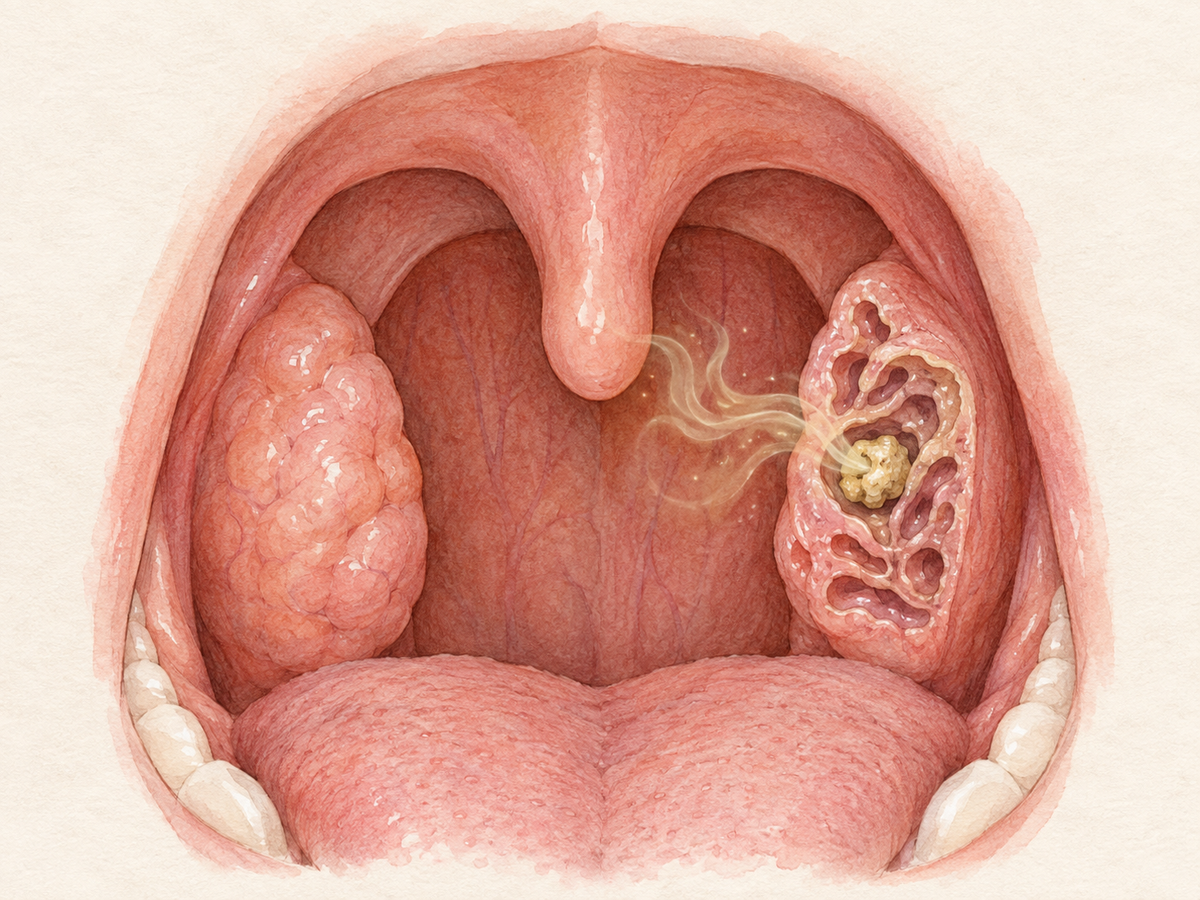
















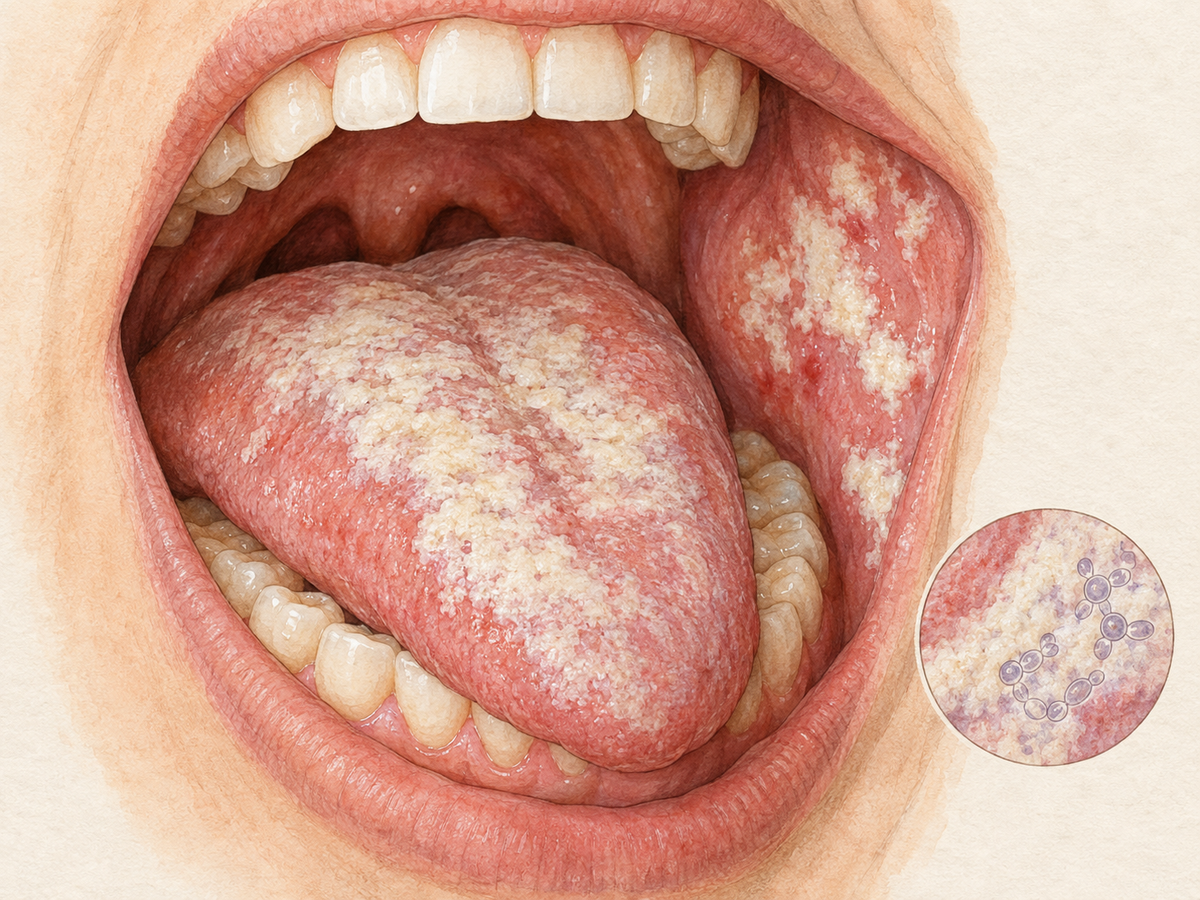
Oral thrush is an overgrowth of Candida, a type of yeast that normally lives in small amounts in your mouth. It happens when the mouth’s normal balance is disrupted—often by antibiotics, inhaled steroid medicine, dry mouth, diabetes, dentures, smoking, or a weakened immune system. It is a treatable infection, not a sign of poor hygiene.
Thrush usually means the mouth’s normal balance has shifted. Treating the overgrowth and the trigger underneath are both important.
Why Candida Overgrows
Your mouth is not a sterile place. It naturally holds a mix of bacteria and small amounts of yeast. Saliva, normal mouth bacteria, and your body’s infection defenses usually keep the yeast under control.
Candida is present in the mouths of up to 60% of healthy people without causing symptoms, according to clinical evidence on oral candidiasis. It only becomes a problem when it multiplies faster than the body can control it.
Think of it like a balance scale. On one side are the things that keep yeast in check: spit, helpful bacteria, and a healthy immune response. On the other side are things that help yeast grow: less spit, fewer helpful bacteria, or a weakened immune system. When the second side gets heavier, yeast can overgrow on the lining of the mouth.
That overgrowth is called oral thrush, or oral candidiasis. In most people, it stays on the surface of the mouth. If the immune system is very weak and the infection is not treated, it can spread deeper.
Common Causes and Triggers
Common triggers include antibiotics, inhaled steroids, diabetes, dry mouth, dentures, smoking, and weakened immunity, according to clinical evidence on oral candidiasis. Causes often stack. For example, an inhaler plus dry mouth plus dentures can add up more than any one factor alone.
- Antibiotic medicines: They can kill off normal mouth bacteria that usually help keep yeast in check.
- Inhaled steroid medicines: These are often used for asthma or COPD. The medicine can settle in the mouth and weaken local defenses. A study of adults using inhaled corticosteroids found oral thrush was a relatively common issue.
- Diabetes: High blood sugar can favor yeast growth. A meta-analysis of studies on diabetes and Candida found that people with diabetes were more likely to have Candida in the mouth, and poor blood sugar control raised the risk further.
- Dry mouth: Less spit means less natural washing of the mouth. Dry mouth can come from medicines, certain conditions, or aging.
- Dentures: Removable dentures can create a warm, protected space. Wearing them overnight or not cleaning them well can increase yeast buildup, according to research on denture stomatitis.
- Smoking: Tobacco can harm the mouth’s natural defenses and healing.
- Weakened immunity: This includes chemotherapy, immune-suppressing medicines after an organ transplant, and HIV. These treatments or conditions reduce the body’s ability to control yeast.
These triggers do not mean you did something wrong. Many are side effects of needed medicines or conditions you cannot fully control.
Who’s Most at Risk
Some people are more likely to get thrush simply because their defenses, medicines, or daily life create a bigger opening for yeast. Being in a risk group is not a personal failure.
- Babies: Their immune defenses are still developing. Thrush in newborns often clears on its own within several weeks, but it is still worth checking with a doctor or dentist.
- Older or frail adults: Age, frailty, or difficulty keeping the mouth clean can raise risk. Caregivers can help with gentle, consistent mouth care.
- Denture wearers: Dentures that are not removed overnight, do not fit well, or are not cleaned daily can hold yeast.
- People with diabetes: Especially when blood sugar is high.
- People receiving cancer treatment: Cancer and treatments such as chemotherapy can weaken immune defenses and cause dry mouth.
- Transplant recipients: Medicines that prevent organ rejection also reduce the body’s ability to fight yeast.
- People taking steroid or antibiotic medicines: These may change the mouth’s normal balance.
If you or someone you care for is in one of these groups, it helps to watch for early signs and treat thrush promptly.
Signs and Diagnosis
The most common sign is creamy white patches. They may show up on the tongue, inner cheeks, gums, tonsils, or roof of the mouth.
Other possible signs include:
- Redness or soreness under or around the white patches
- Bleeding if the patch is rubbed or scraped
- A burning feeling in the mouth
- A cotton-like taste
- Pain when eating or swallowing
Thrush patches may look like food residue, but they are usually harder to wipe away than milk or food film. Scraping a thrush patch can leave a red, sore area behind, according to clinical descriptions of oral candidiasis.
Some other conditions can look similar, such as dry mouth, a condition called lichen planus, or leftover food coating. That is why a dentist or doctor usually checks the mouth and asks about your medicines and health history.
In many cases, the diagnosis is based on looking at the mouth, according to a clinical overview of oral candidosis. If the case is unusual, keeps coming back, or does not respond to treatment, the clinician may gently scrape a patch or take a sample for testing.
Treatment and Self-Care
Treatment aims to clear the yeast and fix the trigger that let it grow. Many mild cases can be treated with topical antifungal medicine, meaning it is applied right where the infection is. More severe or stubborn cases may need pills.
Common options include:
- Nystatin rinse: A liquid you swish and hold in your mouth. It needs direct contact with the affected area to work.
- Clotrimazole lozenges: Dissolving lozenges that slowly release medicine in the mouth.
- Fluconazole pills: Oral medicine used for moderate-to-severe, resistant, or more widespread cases, according to clinical treatment guidance.
Your dentist or doctor will choose based on how severe the thrush is and your overall health.
Self-care also matters:
- Eat soft, cool, non-acidic foods while your mouth is sore.
- Avoid alcohol, tobacco, and spicy foods until you heal.
- Keep your mouth clean with gentle brushing.
- If you wear dentures, remove them at night and disinfect them daily. Guidelines recommend denture disinfection as part of treatment for denture-related thrush, not just antifungal medicine alone, according to clinical guidance on candidiasis.
- Finish the full course of antifungal medicine, even if your mouth feels better early.
- Ask your doctor or pharmacist about drug interactions, especially if you take other regular medicines.
- Soothing rinses or numbing mouthwashes may ease discomfort, but they do not replace antifungal treatment.
For some people with diabetes or a high cavity risk, liquid nystatin and clotrimazole lozenges may contain sugar. If this is a concern, ask about alternatives. Treatment guidance notes that fluconazole or itraconazole can be alternatives in these situations.
When to Get Help
Most thrush can be treated safely at home with prescribed medicine. But some signs need prompt medical attention.
Contact a dentist, doctor, or urgent care if you or someone you care for has:
- Difficulty swallowing
- Difficulty breathing
- Fever
- Signs of dehydration, such as very dry mouth, little urine, or weakness
- Redness or swelling that spreads beyond the white patches
- Thrush symptoms and a weakened immune system from cancer treatment, transplant medicine, or HIV
These signs can mean the infection is moving deeper or the body is having a harder time fighting it. When the immune system is very weak, oral thrush can spread to the esophagus, the tube that carries food to the stomach, or beyond, according to clinical guidance on oral candidosis.
Do not rely on home remedies alone if you have these warning signs.
Preventing Recurrence
Thrush can come back if the underlying trigger is still present. The goal is to reduce the conditions that help yeast grow.
Everyday habits that help:
- Rinse your mouth with water after using an inhaled steroid, then spit it out.
- Work with your care team to keep blood sugar in your target range if you have diabetes.
- Clean dentures daily and remove them at night.
- Treat dry mouth with water, saliva substitutes, or advice from your dentist or doctor.
- Limit unnecessary antibiotics. Use them only when a clinician says they are needed.
- Stop smoking or cut back, and ask for support if needed.
If thrush returns after treatment, do not just repeat the same medicine and assume it will work. Follow up with a dentist or doctor. Recurrence often points to an untreated trigger, such as dry mouth, denture fit or cleaning issues, or a medicine that needs adjusting, according to clinical guidance on recurrent oral candidiasis.
Small daily habits really do add up. With the right treatment and a plan for the trigger, most people can clear thrush and reduce the chance of it coming back.
This article has been reviewed by an oral health professional for accuracy. It is intended to provide general educational information and should not be used as a substitute for personalized medical advice, diagnosis, or treatment. If you have questions or concerns about your oral health, please consult a dentist, physician, or other qualified healthcare provider.