







Most people breathe through their mouth at times—when a cold blocks the nose, during hard exercise, or for a few minutes after a workout. That kind of temporary mouth breathing is normal and usually harmless. What deserves attention is ongoing mouth breathing, especially while resting or sleeping, because it can dry out the mouth and may signal a blocked nose or a sleep problem. If that sounds familiar, the next step is to figure out the reason, not ignore it.
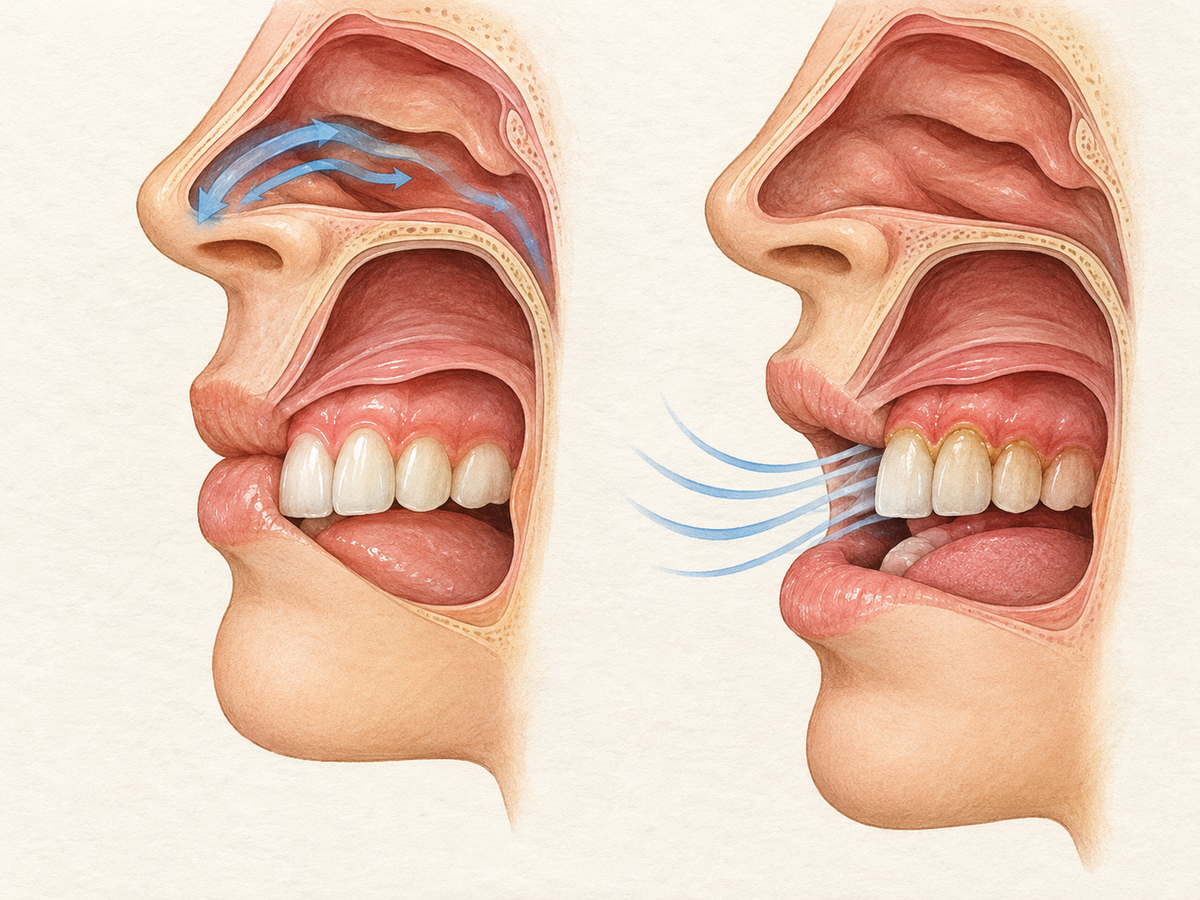
Mouth breathing is a problem when it becomes the default pattern, especially at rest or during sleep. Occasional mouth breathing is common.
When Mouth Breathing Is Worth Checking
A stuffy nose from a cold, allergies, or exercise can make anyone breathe through the mouth for a while. This usually settles when the nose clears and is not automatically harmful.
Chronic mouth breathing means the pattern lasts for months and tends to continue even when you are sitting still or asleep. One review describes it as a pattern in which the mouth replaces normal nasal breathing, either fully or partly, for six months or longer. clinical review on mouth breathing syndrome
You do not need to watch yourself all day to notice clues. Signs worth paying attention to include:
- Lips held apart when resting
- Noisy breathing or snoring during sleep
- Dry mouth and dry lips
- Thirst or a dry feeling when you wake up
- Mouth open during the day without noticing
None of these signs alone means something serious. They are just clues that the mouth may be doing the nose’s job too often.
Why It Happens
The right fix depends on the cause, so do not assume it is only a bad habit. Common reasons include:
- Allergies or hay fever: the immune system overreacts to pollen, dust, or pet dander, causing the nose lining to swell.
- Colds or sinus infections: temporary nasal blockage that usually improves.
- Enlarged tonsils and adenoids: soft tissue at the back of the throat and nose can grow enough to block airflow.
- Deviated septum: the divider inside the nose is crooked, making one or both sides narrow.
- Jaw shape or bite structure: how the teeth and jaws fit together can affect how easily the lips stay closed.
- Sleep apnea: breathing pauses during sleep can cause gasping or mouth opening, but mouth breathing alone does not prove sleep apnea.
- Habit: after a stuffy nose clears, the mouth-breathing pattern can continue.
In some children, no clear blockage is found, so the cause may be a muscle and postural pattern rather than a simple obstruction. clinical review on mouth breathing syndrome
Effects on Teeth and Gums
Saliva is the mouth’s built-in rinse. It washes away food, helps buffer acids, and keeps tissues moist.
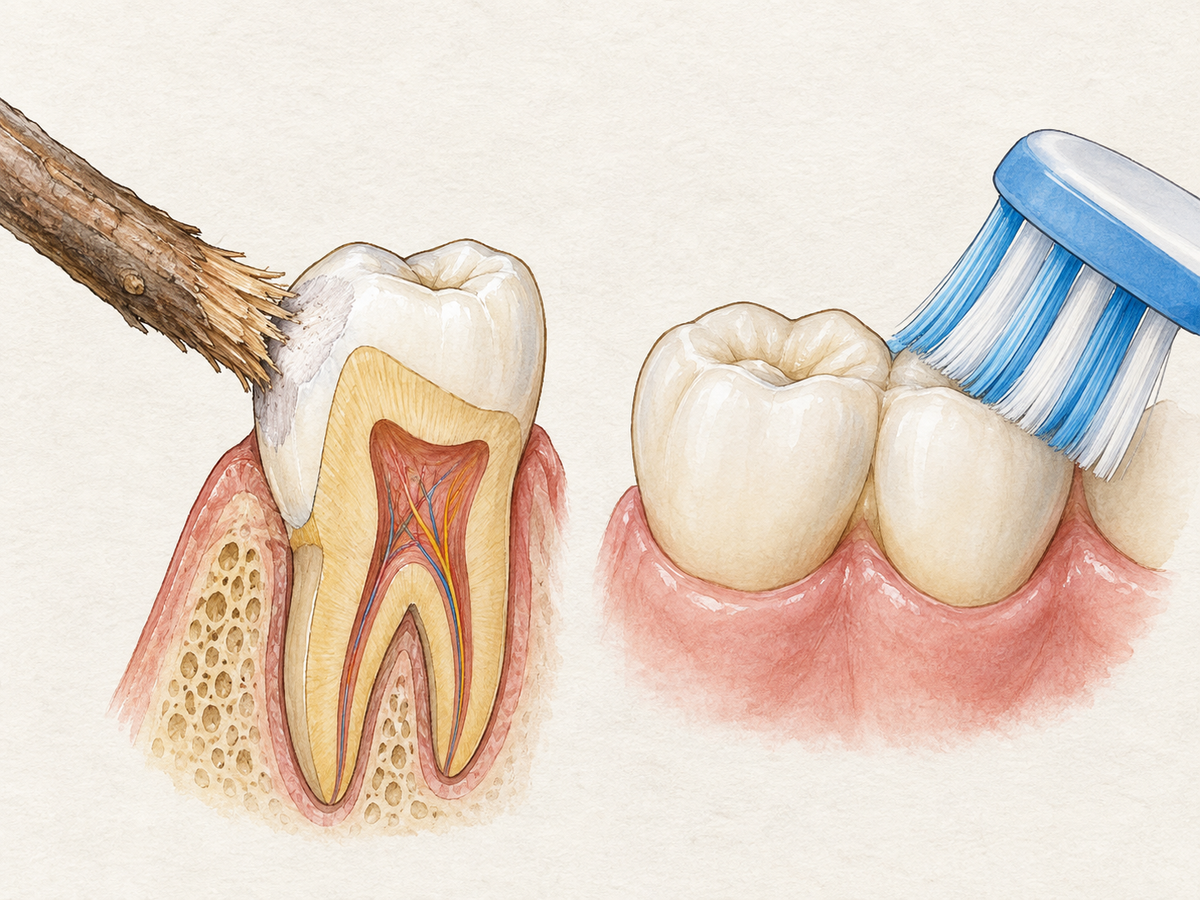
When you breathe through the mouth, air constantly moves over the teeth and gums. That dries things out. Less saliva can make it easier for plaque to build up, which raises the risk of:
- Cavities
- Gum irritation and bleeding
- Bad breath
- Mouth sores or dry, uncomfortable tissue
A systematic review of children and adolescents found more plaque, gum bleeding, and gum changes in mouth breathers than in nose breathers. The same review found limited evidence linking mouth breathing to certain early or advanced cavities. systematic review on dental and gum outcomes
In growing children, long-standing mouth breathing may also overlap with changes in tooth alignment and jaw shape. Malocclusion means the upper and lower teeth do not fit together in the usual way. Some children who breathe through the mouth may develop a narrow upper jaw, an open bite, or a more downward and backward jaw posture. review on mouth breathing and facial development
These risks are easier to manage once the cause is identified and treated.
Effects on Sleep and Daily Health
At night, mouth breathing can dry the throat. It often shows up alongside:
- Snoring or noisy breathing
- Restless, poor-quality sleep
- Dry mouth or throat when waking
- Morning headaches
- Daytime tiredness or trouble concentrating
These can happen even if you do not have sleep apnea.
Sleep apnea is a separate sleep condition in which breathing stops or becomes very shallow for short periods during sleep. Mouth breathing and sleep apnea can overlap, but mouth breathing alone does not mean you have sleep apnea. Common sleep apnea signs include loud or irregular snoring, gasping or choking while asleep, and excessive daytime sleepiness. consensus statement on sleep apnea
If you notice gasping, choking, or breathing pauses during sleep, or if daytime sleepiness feels severe, see a doctor or sleep specialist promptly.
Why Kids Need Extra Attention
Children are still growing the bones and muscles of the face and jaws. That means an ongoing mouth-breathing pattern may have a bigger effect in childhood than it does in adulthood.
Studies have linked persistent mouth breathing in children to differences in jaw position, facial height, and tooth alignment. systematic review and meta-analysis
Parents may notice:
- Regular snoring
- Lips held apart at rest
- Repeated or long-lasting stuffy nose
- Tiredness or trouble focusing during the day
These are clues, not a reason to blame the child. Early evaluation by a dentist, orthodontist, or ear, nose, and throat specialist can help catch treatable causes like allergies or enlarged tonsils during active growth.
How to Start Nose Breathing
Supportive habits can help, but they are not cures. Start with the cause.
- Treat nasal congestion first. If allergies or a cold keep the nose blocked, talk with a doctor or pharmacist about safe options.
- Clear mucus gently. A saltwater saline rinse can help some people, if appropriate for you.
- Stay hydrated. Sipping water during the day keeps the mouth and throat more comfortable.
- Practice gentle nose breathing when the nose is clear. Close your lips softly and breathe in and out through the nose for a few minutes. Stop if it feels difficult.
- Look at sleep position. Some people find side sleeping or a slightly raised head helps, but this is a comfort measure, not a cure.
One randomized study found that adding nasal breathing exercises to an allergy nasal spray reduced symptoms more than the spray alone. randomized study on nasal breathing exercises
Do not push nose breathing when the nose is blocked. And do not use mouth tape or lip tape without medical advice. A review of mouth-taping studies found potential serious harm when people use it without first confirming that the nasal airway is clear. review on mouth taping
Treatments That Address the Cause
The best approach is to match treatment to the cause.
| If the cause is | A professional may discuss |
|---|---|
| Allergies or hay fever | Allergy management, including trigger control, nose sprays, or allergy medicines |
| Enlarged tonsils or adenoids | Ear, nose, and throat evaluation; possible procedure if blockage is significant |
| Deviated septum or other structural blockage | ENT evaluation and possible surgical treatment |
| Jaw shape, bite, or tooth alignment | Orthodontic or dental care |
| Oral or facial muscle pattern | Myofunctional therapy, with mixed evidence |
| Suspected sleep apnea | Sleep evaluation and treatment guided by a sleep specialist |
Myofunctional therapy uses exercises for the lips, tongue, and cheeks to improve oral posture and breathing. Evidence for this therapy is limited and inconsistent. systematic review on orofacial myofunctional therapy
Do not combine multiple remedies on your own. Ask a professional which path matches your symptoms.
Common Mistakes and Red Flags
Avoid these common mistakes:
- Ignoring long-term nasal congestion
- Self-prescribing decongestant nose spray for weeks without guidance
- Using mouth tape without checking whether the nose can supply enough air
- Assuming it is only a bad habit and skipping an evaluation
Red flags that deserve prompt medical attention:
- Breathing pauses, choking, or gasping during sleep
- Severe daytime sleepiness
- Snoring that is loud and frequent
- An ongoing blocked nose that does not improve
- A child who keeps the mouth open at rest along with snoring or sleepiness
If any of these appear or symptoms are frequent and worsening, see a dentist, ENT, or sleep specialist. Occasional mouth breathing is normal. But a persistent pattern is a signal worth investigating rather than ignoring or taping shut.
 Best Overall
 Best Value
 Best for Sensitive Teeth
This article has been reviewed by an oral health professional for accuracy. It is intended to provide general educational information and should not be used as a substitute for personalized medical advice, diagnosis, or treatment. If you have questions or concerns about your oral health, please consult a dentist, physician, or other qualified healthcare provider.