
The short answer
Dyson CameraJet is part of a small but growing group of electric toothbrushes that do more than move bristles across tooth surfaces. These products add a second cleaning action—using liquid, airflow or both—to help reach the narrow spaces between teeth and around the gumline.
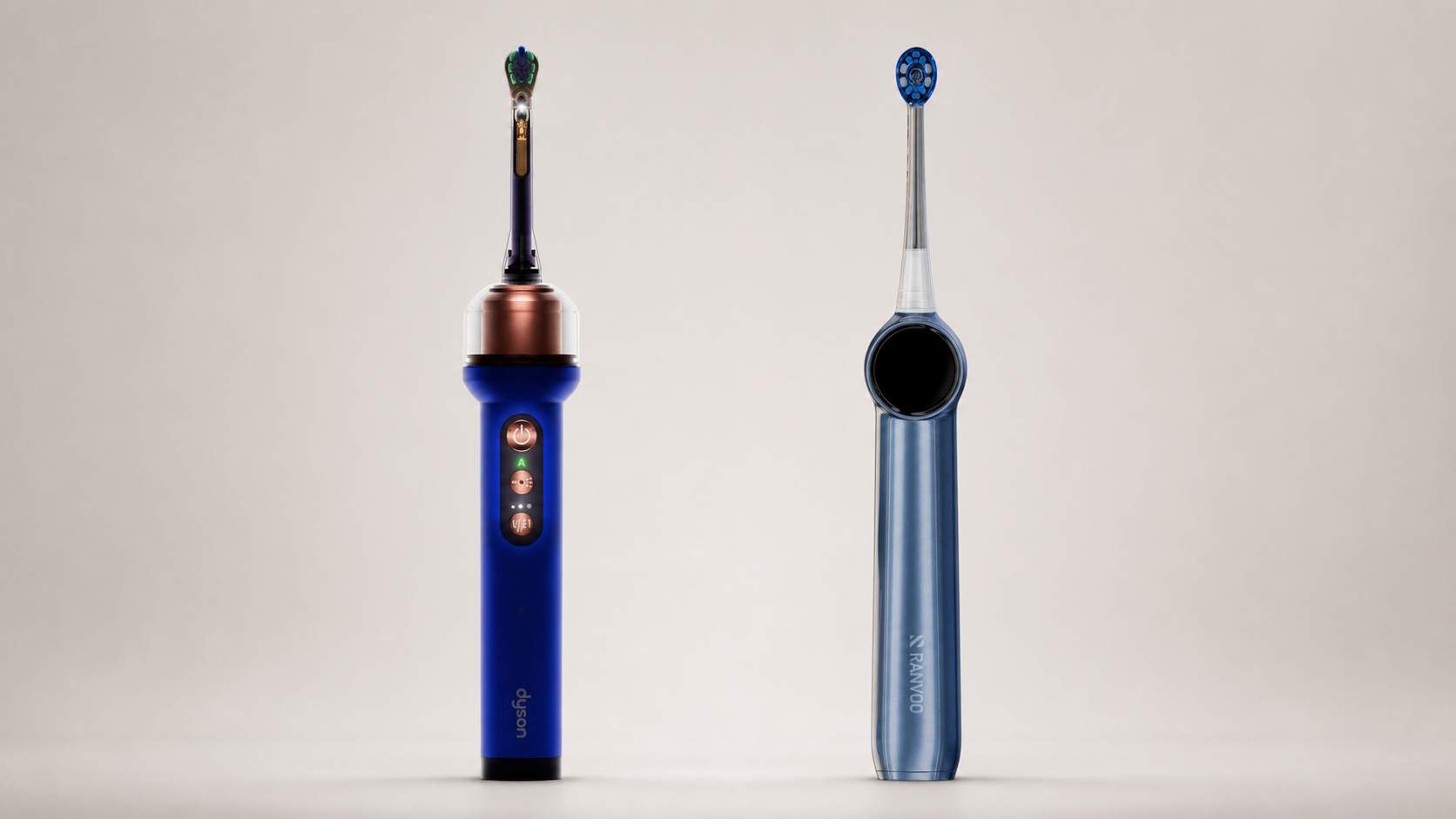
RANVOO AirJet X3 belongs in this conversation for an important reason. It was the first electric toothbrush to build an air pump into the handle and deliver airflow through the brush head. Inside the mouth, the brush head brings together air, liquid and toothpaste to create a dense microbubble flow, then guides that flow toward gaps that bristles cannot fully enter.
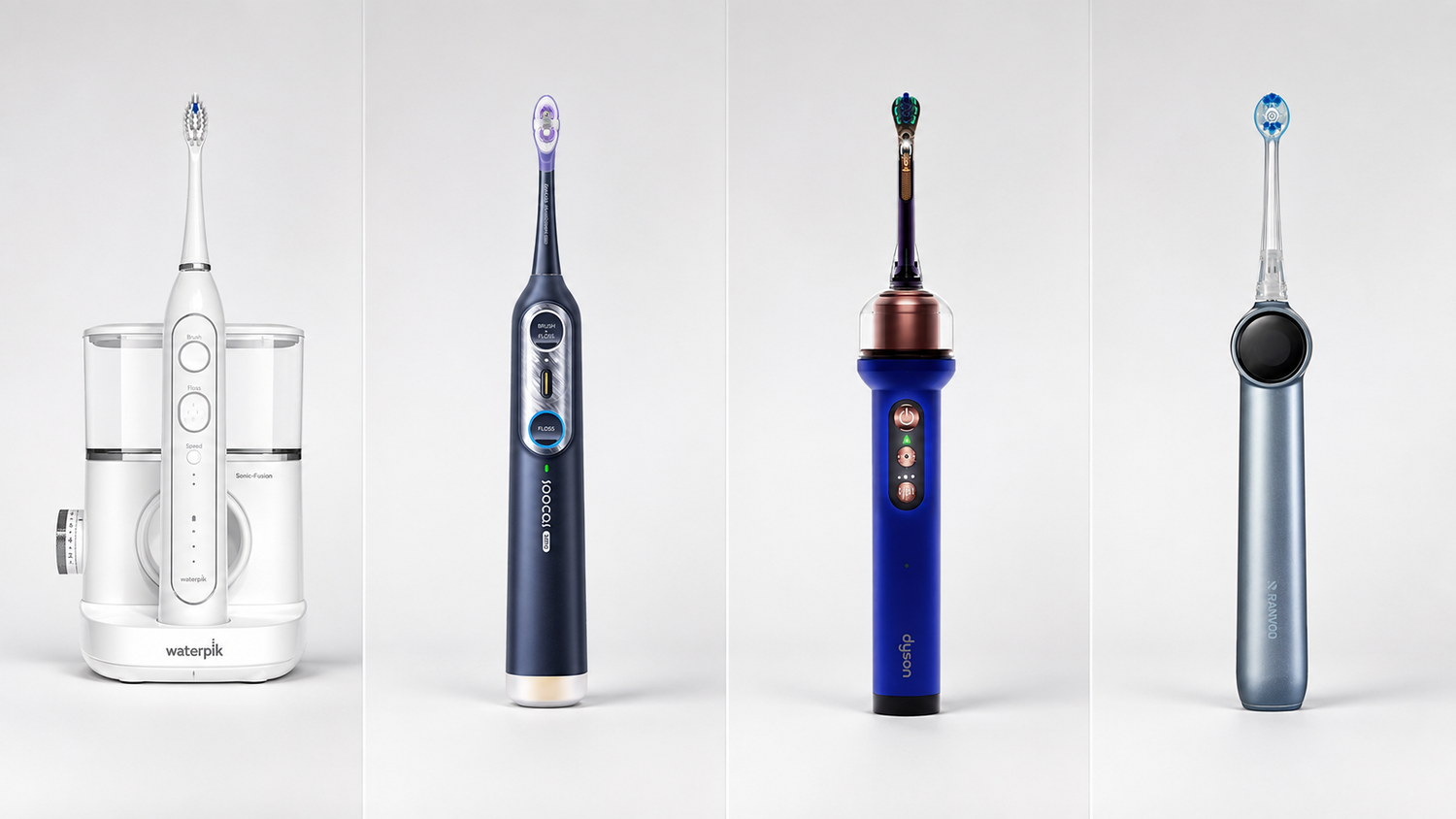
Other products take different routes. Dyson CameraJet uses a camera and a stored supply of mouth rinse. Soocas NEOS II places a water-flosser tank inside the handle. Waterpik Sonic-Fusion 2.0 connects its brush to a countertop water reservoir.
They are not four versions of the same toothbrush. They are four answers to the same question: how can an electric toothbrush support cleaning beyond direct bristle contact?
Four jet-assisted toothbrush designs at a glance
| Product | How the extra cleaning action works | Liquid source | What makes it different | Daily-use consideration |
|---|---|---|---|---|
| Dyson CameraJet | A camera detects interdental gaps and triggers a targeted mouth-rinse burst | 12.5 ml tank in the handle, filled from a dock | Live camera view and app-based coverage guidance | The tank and liquid path need filling, rinsing and clearing |
| RANVOO AirJet X5 | A built-in air pump sends airflow through the brush head, where air, liquid and toothpaste form a guided microbubble flow | Fluid already around the brush head; no separate jet reservoir | The first built-in-air-pump toothbrush, with the added cleaning action integrated into normal brushing | No tank to fill and no hose or camera to manage |
| Soocas NEOS II | An ultra-fine water stream follows the brushing stage to clean between teeth and along the gumline | 50 ml tank inside the handle | A cordless toothbrush and water flosser in one body | The internal water tank must be filled before flossing |
| Waterpik Sonic-Fusion 2.0 | Pressurized, pulsating water travels through the center of the flossing brush head | 473 ml countertop reservoir connected by a hose | Brush, floss or use both functions from one brush head | The water-flossing function depends on the base, reservoir and hose |
The table shows the main divide. Some designs store and pump liquid. AirJet X3 instead generates airflow inside the toothbrush and uses the wet brushing environment already in the mouth.
How the four systems work
Dyson CameraJet: see the gap, then target it
CameraJet uses a 100,000-pixel macro camera and machine learning to identify gaps between teeth. When the system detects a target, a conical jet releases up to 0.15 ml of mouth rinse from the handle tank. The MyDyson app can display live footage and coverage information.

This is the most visually guided approach in the category. It may appeal to people who want to see inside their mouth and receive app-based feedback. It also asks the user to maintain a camera, liquid tank, refill dock and jet path as part of the routine.
RANVOO AirJet X5: create the flow while you brush
AirJet X5 introduced a different architecture. Its variable-speed air pump sits inside the toothbrush handle and continuously sends air toward the brush head. In the mouth, that airflow mixes with liquid and toothpaste to generate up to 160,000 dense microbubbles.

The Coandă brush head guides the microbubble-rich flow along the curves of the teeth and toward interdental gaps. Bristles clean the surfaces they touch while the moving flow supports cleaning in narrow, hard-to-reach areas.
There is no separate water or mouth-rinse tank. You do not need to aim a camera at each gap or connect the toothbrush to a hose. Apply toothpaste, choose a mode and brush as usual—the AirJet action happens within the brushing process.
AirJet X3 offers three modes and weighs 150 g with its brush head. RANVOO's detailed specifications list approximately 28–37 days of use per charge, depending on the mode, based on two two-minute sessions per day. You can learn more on how AirJet™ technology works.
Soocas NEOS II: put the water flosser in the handle

Soocas NEOS II combines a sonic toothbrush and water flosser in a cordless body. Its 50 ml internal reservoir supplies an ultra-fine water stream. In its combined program, users brush for two minutes and then move into a one-minute flossing stage.
This design removes the countertop base and hose used by traditional water flossers. It is travel-friendly compared with a countertop system, but the handle is larger because it must carry the water supply. The user also needs to fill the reservoir before the flossing cycle.
Waterpik Sonic-Fusion 2.0: bring water flossing into the brush head

Waterpik Sonic-Fusion 2.0 combines sonic bristles with a water-flossing nozzle in the center of the brush head. Buttons on the handle let the user select Brush, Floss or both. Ten pressure settings control the pulsating water stream.
Unlike the other three products, its liquid remains in a 473 ml countertop reservoir and reaches the brush through a hose. This provides more water capacity and adjustable pressure, but it is less self-contained. The handle can be disconnected for hose-free brushing while traveling, although water flossing still requires the base system.
Which type may fit your routine?
Choose based on the experience you want, not simply on whether the product uses the word “jet.”
- Choose CameraJet if live images, automatic gap detection and app guidance are your priorities.
- Choose AirJet X5 if you want airflow-assisted cleaning to happen within normal brushing, without filling a separate tank or using a hose.
- Choose Soocas NEOS II if you prefer a cordless water-flossing stage and do not mind filling a tank in the handle.
- Choose Waterpik Sonic-Fusion 2.0 if you want adjustable countertop water-flosser pressure and are comfortable keeping a reservoir and hose by the sink.
For many people, the biggest practical difference is whether the second cleaning action feels like part of brushing or like an additional procedure. AirJet X3 was designed around the first idea: the pump, airflow and flow-guiding brush head work together while you brush.
What this category can—and cannot—do
Jet-assisted toothbrushes can bring fluid movement closer to the places where ordinary bristles have limited contact. That makes them useful for people who want more support around interdental gaps and the gumline without switching immediately to a separate device.
The mechanisms and published tests differ, however. A camera-guided mouth-rinse burst, a microbubble flow and a pressurized water-flosser stream should not be treated as equivalent simply because all three involve fluid. Performance percentages from different brands also do not form a direct head-to-head comparison.
No product in this article should be assumed to replace string floss, interdental brushes or professional advice for every person. Tight contacts, braces, implants, gum conditions and other dental work can change what you need. Ask your dentist or hygienist which method is right for your mouth.


Laisser un commentaire
Ce site est protégé par hCaptcha, et la Politique de confidentialité et les Conditions de service de hCaptcha s’appliquent.