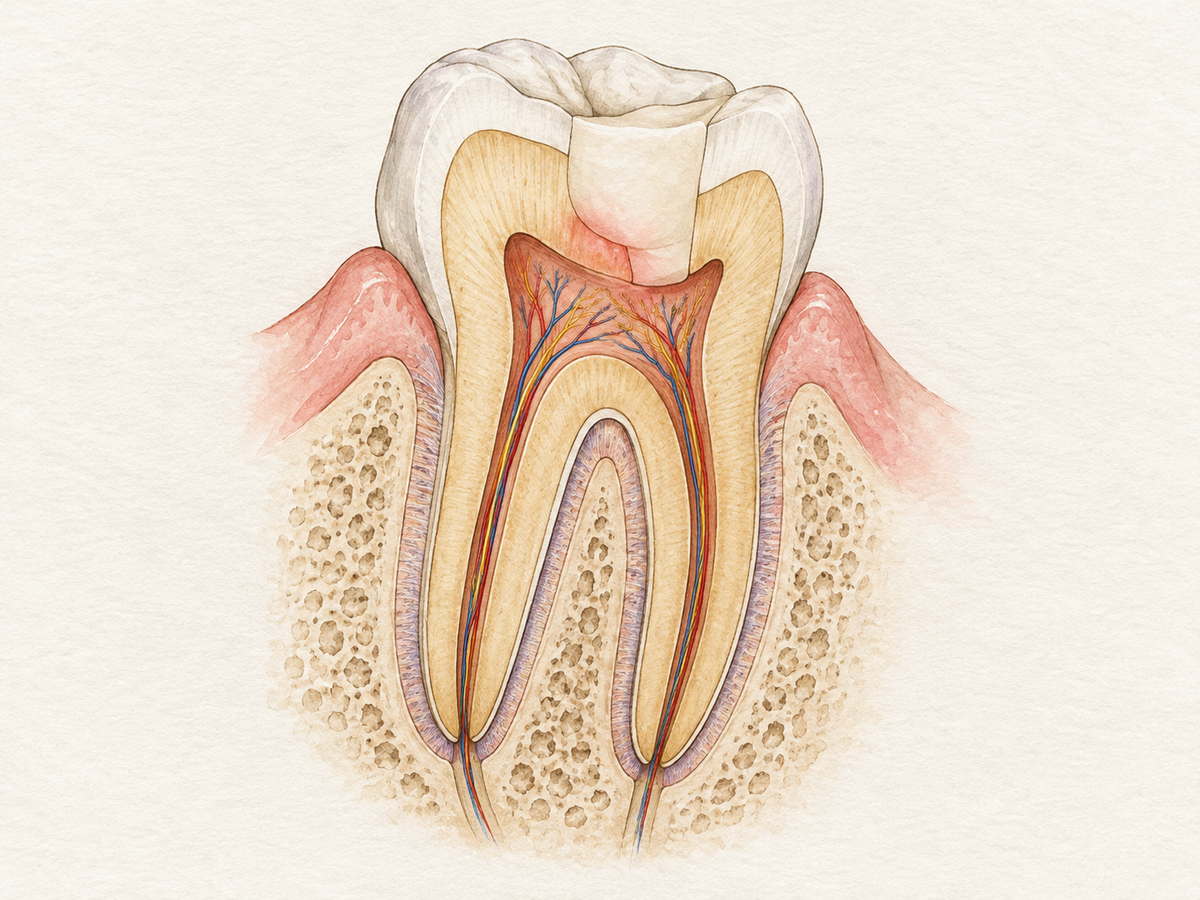








Most tongue and mouth blisters are painful but harmless and heal within one to two weeks. The right treatment depends on what the sore looks like, where it sits, and whether it keeps coming back. A single painful ulcer on the tongue often responds to simple care or a numbing or anti-inflammatory gel. A cluster of tiny fluid-filled blisters near the lip is more likely a cold sore and may need antiviral medicine. A white, creamy patch may be thrush and needs antifungal treatment. The important exception is a painless, firm, or non-healing sore, which should always be checked by a dentist or doctor.
Rule of thumb: if a sore has not healed within two weeks, or it is firm and painless, do not just watch it at home.
What the Look and Location Tell You
Before treating a tongue blister, look at three things: how many there are, how they look, and where they sit.
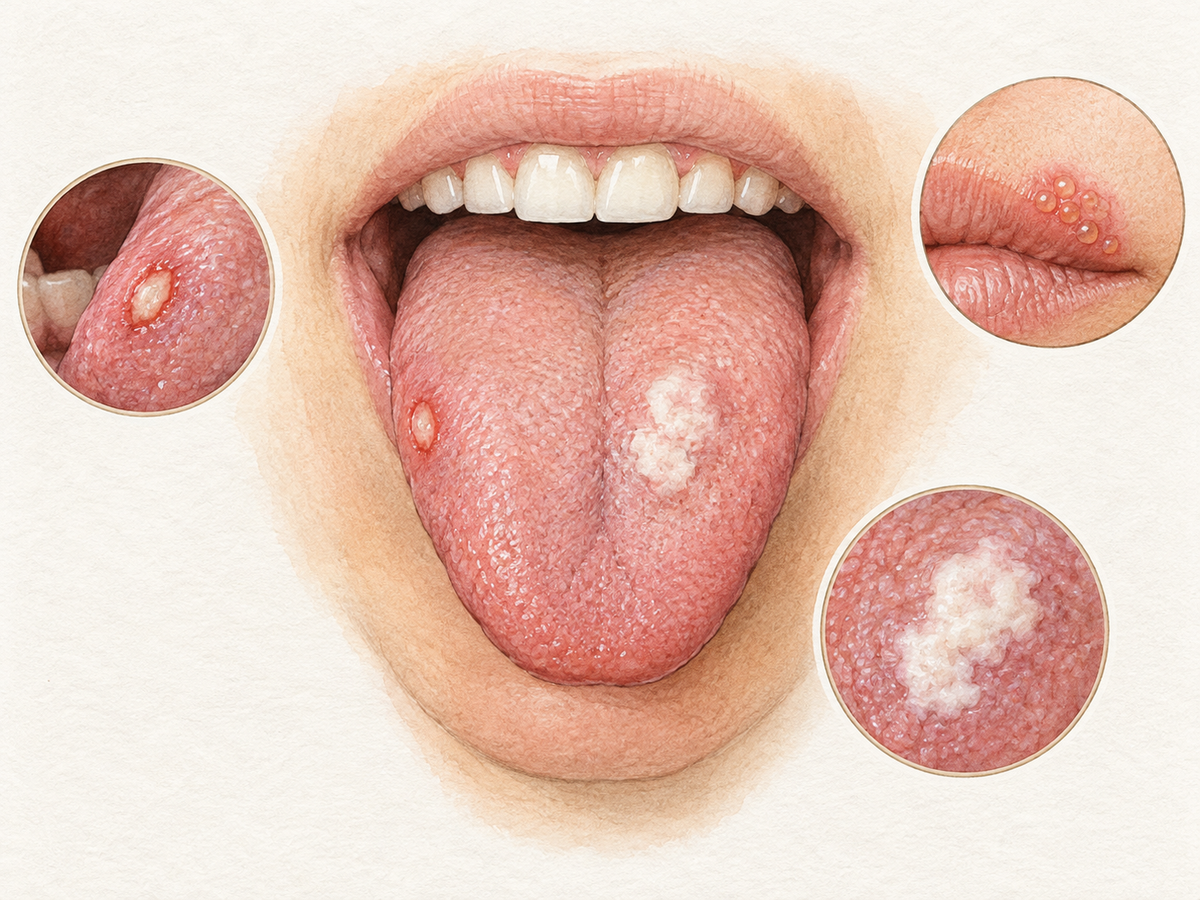
A single shallow open sore with a white or yellow center and a red rim is usually a canker sore. A cluster of small fluid-filled blisters that break open, crust, or tingle is more likely a cold sore. A sore at the exact spot where you bit your tongue or burned it on hot food is probably a traumatic sore. Tiny red or white bumps on the tip or sides of the tongue are usually lie bumps. White patches that wipe away are a different pattern and may be thrush.
These clues matter because treatment is not the same for each. For example, a steroid gel may help a canker sore, but it is not the treatment for a cold sore or thrush. Taking a photo in natural light when the sore is visible can help you describe it to a pharmacist, dentist, or doctor later.
Common Types and Causes
Canker sores. These are shallow, oval or round open sores with a white or yellow center and a red halo. They can be very painful, especially when eating. Minor ones often heal in about 7 to 10 days. They usually appear on softer areas such as under the tongue, inside the lips, or inside the cheeks. The exact cause is not fully understood, but stress, minor mouth injury, and possible nutrient gaps may play a role. Clinical guidance on oral ulcerative lesions
Cold sores. These are caused by the herpes simplex virus. They usually start as a cluster of tiny fluid-filled blisters with tingling or burning, then break open and crust. They most often appear on or near the lips, but herpes can also affect the mouth. Common triggers include stress, sun exposure, cold weather, illness, hormonal changes, and lip or mouth trauma. Oral ulcer patterns and herpes features
Traumatic sores. A burn from hot food, a bite during chewing, sharp food, or rubbing from a broken tooth can cause a single sore at that spot. Traumatic ulcers may look irregular and often have a yellow-white covering. They usually become less painful within a few days after the cause is removed, and most heal within about 10 days. Clinical review of oral ulcerative lesions
Lie bumps. These are small red or white bumps on the tip or sides of the tongue. They can be tender or tingly and usually settle within a few days. They are not a serious condition and do not need drug treatment in most cases.
Thrush. Oral thrush is a fungal overgrowth. It may look like white patches or plaques rather than a fluid-filled blister. The patches can be wiped off, often leaving a red area underneath. Thrush can show up after antibiotics, steroid inhaler use, dry mouth, or times when the immune system is weaker. Fungal oral lesions in clinical guidance
Allergic or irritant reactions. A new toothpaste, mouthwash, food, or medicine can cause redness, swelling, burning, or shallow sores anywhere in the mouth. The reaction usually improves when the contact is removed. Clinical review of oral ulcerative lesions
A firm, painless sore, a growing lump, or a red or white patch that lingers is not a typical blister. This pattern deserves a professional evaluation rather than home treatment.
Treatment by Type
Treatment should match the type of sore.
- Canker sores: Numbing gels, rinses, or anti-inflammatory gels can reduce pain. Prescription topical corticosteroids are often used for canker sores because they may reduce pain and shorten healing time. Umbrella review of canker sore treatments
- Cold sores: Antiviral medicines work against the herpes simplex virus. They are most helpful when started at the first tingle or burning. They may shorten healing time and reduce pain. Systematic review of antiviral medicines for cold sores
- Thrush: Thrush needs an antifungal medicine. A dentist or doctor should guide this choice. Oral mucosal disease management
- Traumatic sores: The main step is to remove or fix the cause, such as smoothing a sharp tooth or avoiding the food that injured you. A numbing gel may help while it heals.
- Lie bumps: These usually need time and reassurance. Cool liquids and bland foods can help with tenderness.
- Allergic or irritant reactions: Stop the suspected trigger and monitor the reaction. If it is severe or worsening, see a dentist or doctor.
Some treatments are available over the counter, such as numbing gels and some cold sore creams. Others, such as prescription antiviral pills, antifungal medicine, or stronger steroid pastes, need a clinician to confirm the diagnosis first.
Antibiotics are not a routine home treatment for cold sores or thrush. Cold sores are viral, and thrush is fungal, so antibiotics do not target the cause. For canker sores, a clinician may choose a specific topical treatment, but that is different from taking leftover antibiotics.
Home Care and Mistakes
Home care can ease pain and support healing, but it cannot cure cold sores, thrush, or a serious lesion.
Things that may help:
- Drink cool water or suck on ice chips if it is comfortable.
- Eat soft, bland foods such as yogurt, applesauce, oatmeal, or scrambled eggs.
- Rinse gently with warm salt water or a baking soda rinse after meals.
- Ask a pharmacist or doctor if an over-the-counter pain reliever is appropriate for you.
Things to avoid:
- Popping, squeezing, or picking the blister.
- Acidic, spicy, or salty foods and drinks.
- Alcohol-containing mouthwash and tobacco.
- Putting undiluted hydrogen peroxide or an aspirin tablet directly on the sore.
- Taking leftover antibiotics.
Red Flags: When to Get Seen
Most tongue blisters get better on their own, but some signs should not wait.
Get an appointment soon if you have:
- A sore that lasts more than two weeks.
- A firm, painless, or growing lump.
- A white or red patch inside the mouth that does not go away.
- Bleeding from a sore without a clear injury.
- Fever with mouth sores.
- Signs of dehydration, such as dry mouth, weakness, or very little urine.
Seek urgent care if you have:
- Trouble breathing or swallowing.
- Swelling that feels like it is affecting your airway.
- A severe infection-like illness with high fever and inability to drink.
A painless sore that does not heal is the one not to watch at home. Mouth cancer can be painless in its early stages, so lack of pain does not mean a sore is harmless. Common benign and malignant oral disease
If They Keep Coming Back
Recurring tongue or mouth sores usually follow a pattern. Cold sores tend to be viral reactivations. Canker sores tend to be inflammatory flare-ups with personal triggers.
Common cold sore triggers include stress, sun exposure, cold weather, illness, hormonal changes, and lip or mouth trauma. Herpes recurrence triggers
Common canker sore triggers may include stress, toothpaste ingredients such as sodium lauryl sulfate, low iron, vitamin B12, folate, food sensitivities, or mouth injury. The exact cause is not always clear. Expert consensus on difficult oral ulcers
A simple trigger diary can help. Write down the date, sore location, how long it lasts, pain level, what you ate, toothpaste changes, stress, illness, and sun exposure. After a few flares, you may see a pattern.
If flares are frequent, severe, or interfere with eating, ask a dentist or doctor. Blood tests may check for nutrient gaps or related conditions. A sore that does not heal may need a biopsy to confirm the diagnosis. Diagnostic approach for difficult oral ulcers
The next step depends on your pattern. If you can identify a trigger, track it and avoid it. If you have an active flare, use the treatment that matches that type. If sores are frequent, severe, or not healing, get a professional evaluation.
This article has been reviewed by an oral health professional for accuracy. It is intended to provide general educational information and should not be used as a substitute for personalized medical advice, diagnosis, or treatment. If you have questions or concerns about your oral health, please consult a dentist, physician, or other qualified healthcare provider.