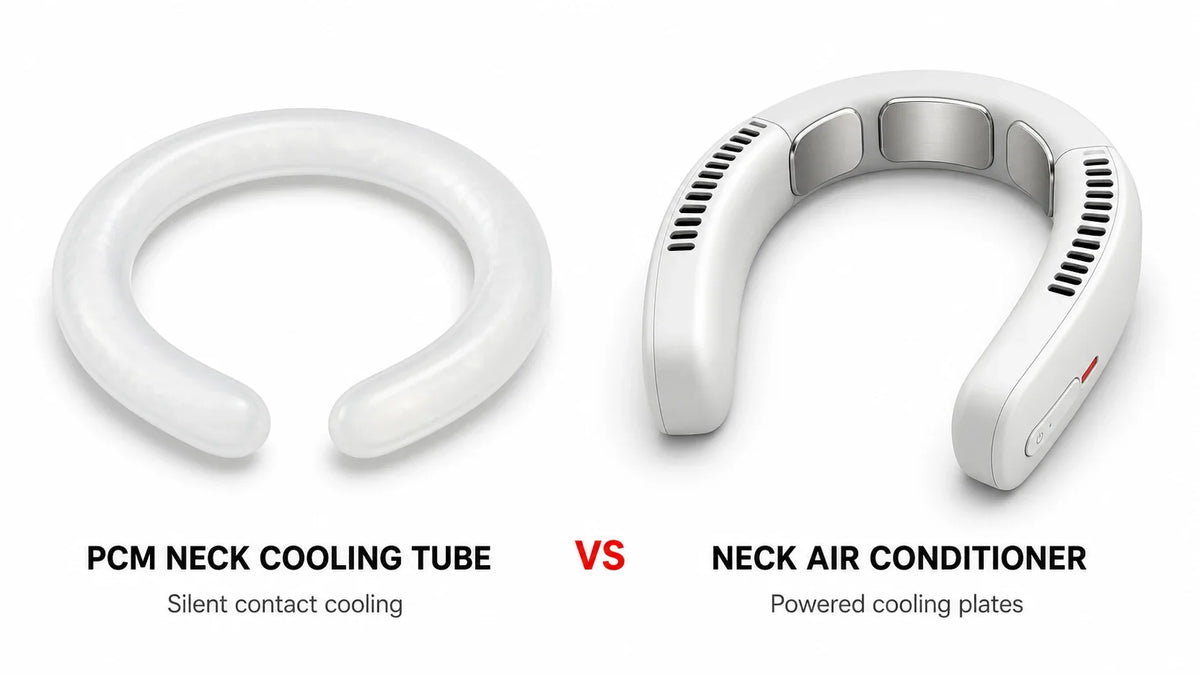
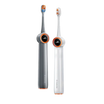
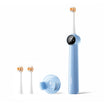
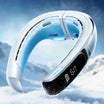
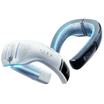
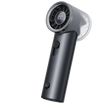
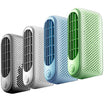


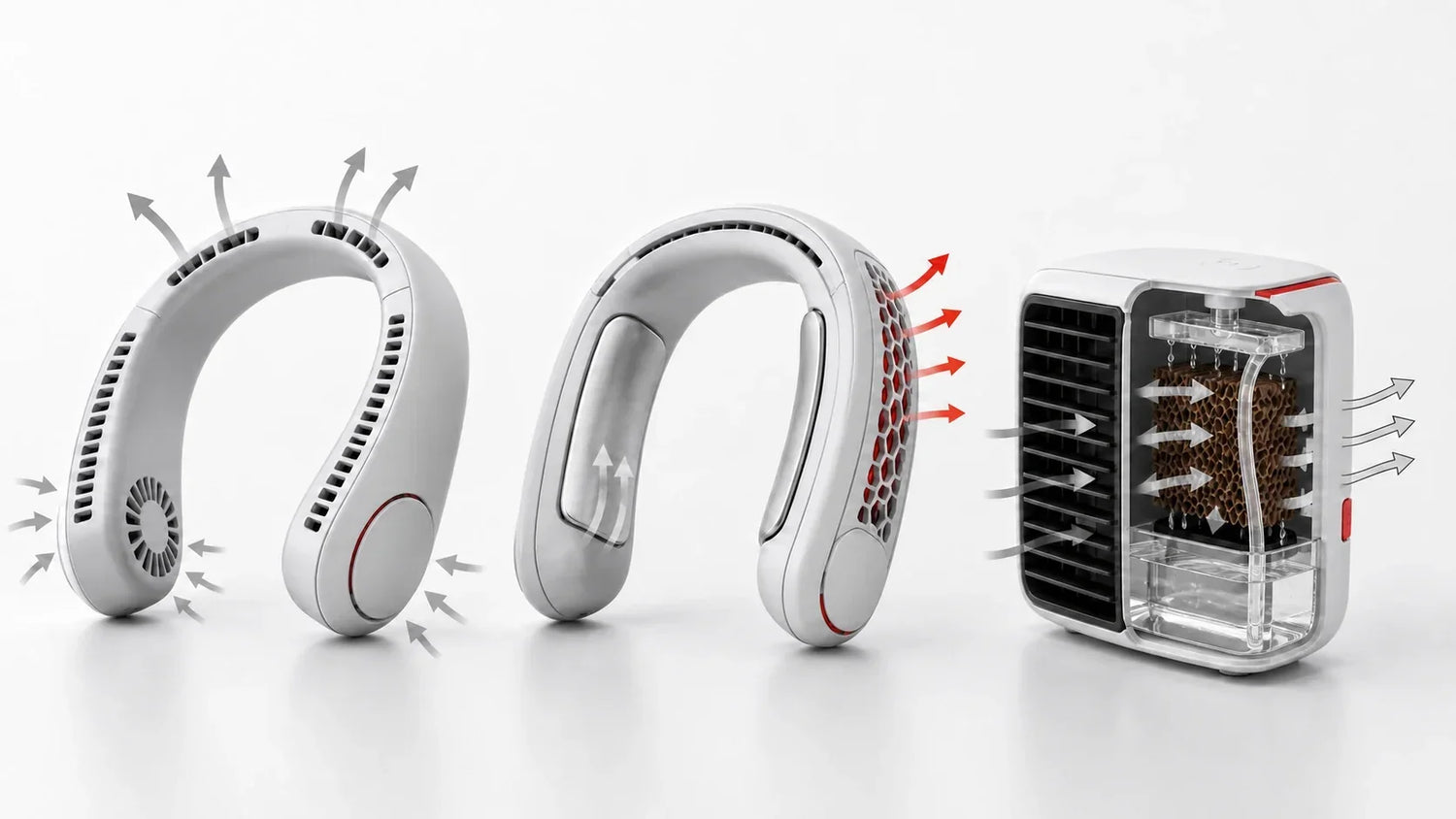
The short answer: A fan moves room-temperature air, a Peltier device cools a contact plate, and an evaporative cooler can cool air only when water evaporates effectively.
Searches for “fans that blow cold air like AC” mix three very different products.
They can all feel cooling.
They do not cool in the same way.
That difference matters in humid weather. It also affects weight, battery life and maintenance.
The three cooling types at a glance
| Cooling type | What it changes | Best condition | Main limitation |
|---|---|---|---|
| Fan | Air speed around the skin | Warm, still air; exposed or sweaty skin | The air itself is usually not chilled |
| Peltier cooling | Temperature of a metal contact plate | Targeted cooling in dry or humid weather | Small contact area and higher battery use |
| Evaporative cooling | Air temperature through water evaporation | Hot, dry air | Performance drops as humidity rises |
The best option depends on what you want to cool.
Do you want faster air across the skin? Choose a fan.
Do you want a cold surface touching the neck? Choose Peltier cooling.
Do you want air that may leave the device cooler than it entered? Consider evaporation—but check the humidity first.
Compare three measurements, not one claim

“Feels cold” can describe three different results.
1. Outlet air temperature
This tells you whether the device actually cools the air.
A fan alone should not produce a meaningful drop below room temperature.
An evaporative cooler may do so. The result depends on temperature and humidity.
2. Contact-surface temperature
This matters for Peltier wearables.
The metal plate may become cooler than the surrounding air. The nearby airflow may still be close to room temperature.
3. Personal comfort
Comfort is what the wearer reports.
Air movement can feel refreshing without lowering room temperature. A small cold plate can also feel powerful without cooling the whole body.
Keep these measurements separate. Otherwise, a cold plate can be mistaken for cold air, and comfort can be mistaken for room cooling.
How a regular fan cools you

A regular fan moves existing air.
It can break up the warm layer next to the skin. It can also help sweat evaporate.
That is why airflow may feel cooler even when a thermometer shows little change in air temperature.
Research on wearable face and neck fans has found improved thermal comfort in warm indoor conditions.[1] UC Berkeley’s thermal-comfort tools also treat higher air speed as a factor that can expand the comfort range.[2]
When a fan works well
-
The air is warm but not extreme.
-
The room feels still.
-
Air can reach exposed skin.
-
Sweat can evaporate.
-
Low weight and long runtime matter.
When it feels weaker
High humidity slows evaporation.
Heavy clothing can block airflow.
Very hot moving air may still feel hot.
A stronger motor does not turn a normal fan into an air conditioner.
For the testing details, read do neck fans really work?
How Peltier cooling feels different

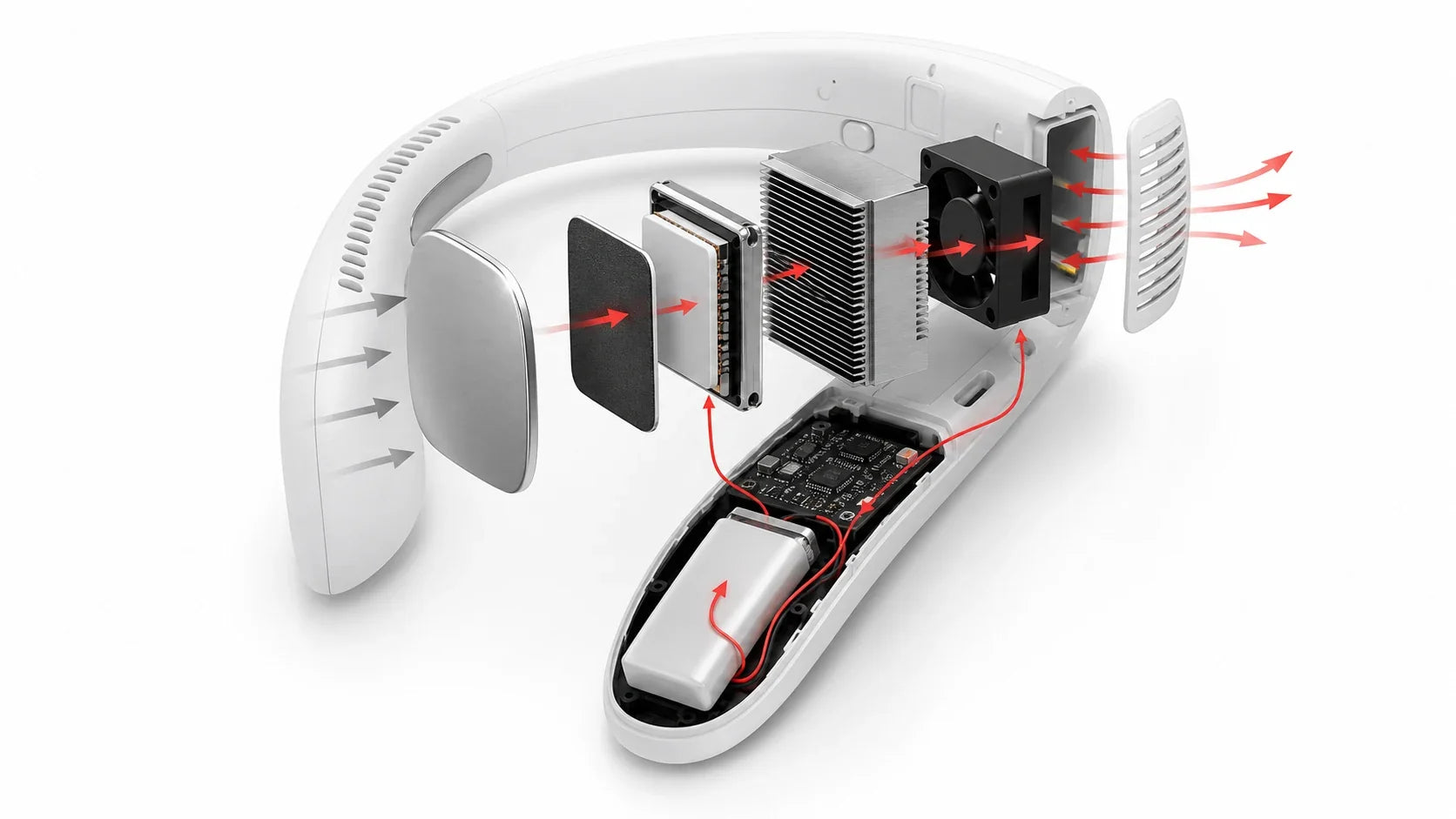
A Peltier module is a small solid-state heat pump.
Electric current moves heat from one side of the module to the other. One side becomes cold. The other side becomes hot.[3]
In a neck air conditioner, the cold side connects to a metal plate. The hot side needs a heat sink and airflow.
The result is direct contact cooling.
What Peltier cooling can do
- Create a cold sensation quickly.
- Cool a small skin area below ambient temperature.
- Work without adding water.
- Feel more consistent than evaporation in humid air.
What it cannot do
It does not cool a room.
It does not make every outlet blow refrigerated air.
It cannot ignore the hot side. Poor heat rejection reduces cold-side performance.
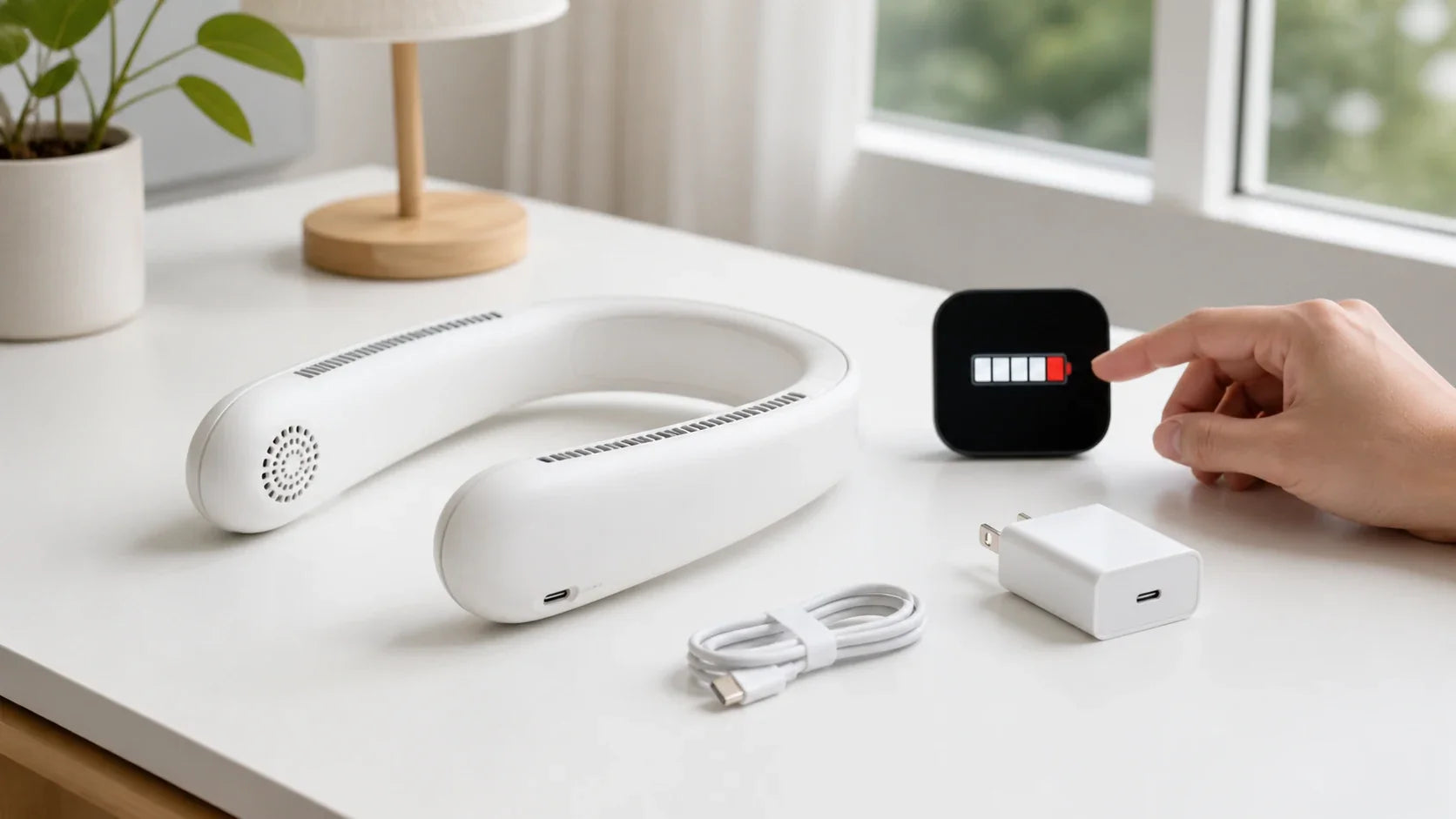
It also needs more power than fan-only airflow. That usually means a larger battery, shorter runtime or both.
See how Peltier coolers work in wearable air conditioners for the complete heat path.
How evaporative cooling produces cooler air

Evaporative cooling uses water.
As water changes into vapor, it absorbs heat. Air passing through a wet medium can therefore leave at a lower temperature.
The limit is linked to wet-bulb temperature.
The National Weather Service describes wet-bulb temperature as the lowest air temperature obtainable through evaporation. It also notes that evaporation decreases as the air contains more water vapor.[4]
In simple terms:
- Hot and dry: more evaporation is possible.
- Warm and humid: less evaporation is possible.
- Near saturation: very little extra evaporative cooling remains.
The U.S. Department of Energy says direct evaporative coolers work best in arid climates.[5]
The tradeoffs
An evaporative personal air cooler needs water and a wet surface.
It also adds moisture to the air.
Small reservoirs need cleaning. Wet pads can collect scale or odor if maintenance is poor.
In a closed, humid room, the benefit may shrink as moisture builds.
Which cooling type should you choose?

| Situation | Best starting point | Why |
|---|---|---|
| Warm office or commute | Fan | Light, simple and effective when airflow is the main need |
| Hot, dry patio | Evaporative cooler | Dry air leaves more room for evaporation |
| Hot, humid commute | Peltier or fan | Peltier does not rely on water evaporation; airflow may still help comfort |
| You want an instant cold touch | Peltier | The plate directly cools the contact area |
| You want long battery life | Fan | Fan-only designs generally demand less power |
| You do not want water or wet pads | Fan or Peltier | Neither requires an evaporative reservoir |
| You need whole-room cooling | Room air conditioning | These personal devices are not substitutes for room AC |
This is a starting point, not a product score.
Fit, airflow direction, noise and real runtime still matter.
Use our neck fan vs neck air conditioner comparison if you are choosing between fan-only and active-cooling neck devices.
For wraps, cooling tubes and other alternatives, see the best neck cooling products guide.
How to read “cold air” marketing claims
Start with the mechanism.
Ask four questions:
- Is there only a fan? Expect airflow, not refrigerated air.
- Is there a water tank or wet filter? It is probably evaporative.
- Is there a cold metal plate and hot-side exhaust? It probably uses Peltier cooling.
- Does the test show room, outlet and surface temperatures separately? If not, the claim is hard to evaluate.
The words “personal AC” or “portable air conditioner” do not prove that a device uses a compressor.
Look for measured conditions.
Temperature without humidity tells only half the story for evaporation.
Plate temperature without ambient temperature hides the size of the temperature difference.
Maximum mode without runtime hides the battery tradeoff.
A quick buying rule
Choose by the result you want:
- More moving air: fan.
- A colder neck surface: Peltier.
- Potentially cooler outlet air in a dry climate: evaporative.
Then compare comfort, weight, noise and cleaning.
Our neck air conditioner buying guide turns those points into a practical checklist.
Personal cooling is not complete heat protection
A cooler face or neck can improve comfort.
It does not prove that your core body temperature is safe.
NIOSH lists temperature, humidity, sun, physical effort, clothing, dehydration and limited air movement among heat-stress factors.[6]
Keep using water, shade, rest breaks and an appropriate heat plan.
Stop activity if dizziness, weakness, nausea, confusion or fainting occurs.
For hair, skin, moisture and battery precautions, read are neck fans safe?.
Frequently asked questions
Is there a fan that blows cold air?
An evaporative cooler can lower outlet-air temperature in dry conditions, while a Peltier product usually cools a contact plate rather than the air.
Do regular fans lower air temperature?
Usually no. They increase air speed and can improve evaporation and comfort.
Are evaporative coolers good in humid weather?
Usually not. Humid air has less capacity to accept more water vapor, so the temperature drop becomes smaller.
Does a Peltier neck fan work in humidity?
Its contact cooling does not depend on water evaporation. Ambient heat, hot-side airflow, fit and power still affect performance.
Is a personal air cooler the same as an air conditioner?
Not necessarily. Many personal air coolers are small evaporative units or fans. They do not dehumidify and cool a room like compressor AC.
Which type feels coldest?
A Peltier plate often creates the strongest immediate cold sensation at its contact point. That does not mean it removes the most heat from the whole body.
The bottom line
A fan moves air.
A Peltier module moves heat through a cold plate.
An evaporative cooler uses water to lower air temperature when the climate allows it.
Choose the mechanism before comparing speeds, modes or marketing names.
Next step: Decide whether you need airflow, cold contact or evaporatively cooled air, then compare products within that one category.
Sources
[2] Center for the Built Environment, UC Berkeley, “CBE Thermal Comfort Tool,” accessed August 19, 2026.
[6] NIOSH, “Heat Stress and Workers,” reviewed July 11, 2024.