












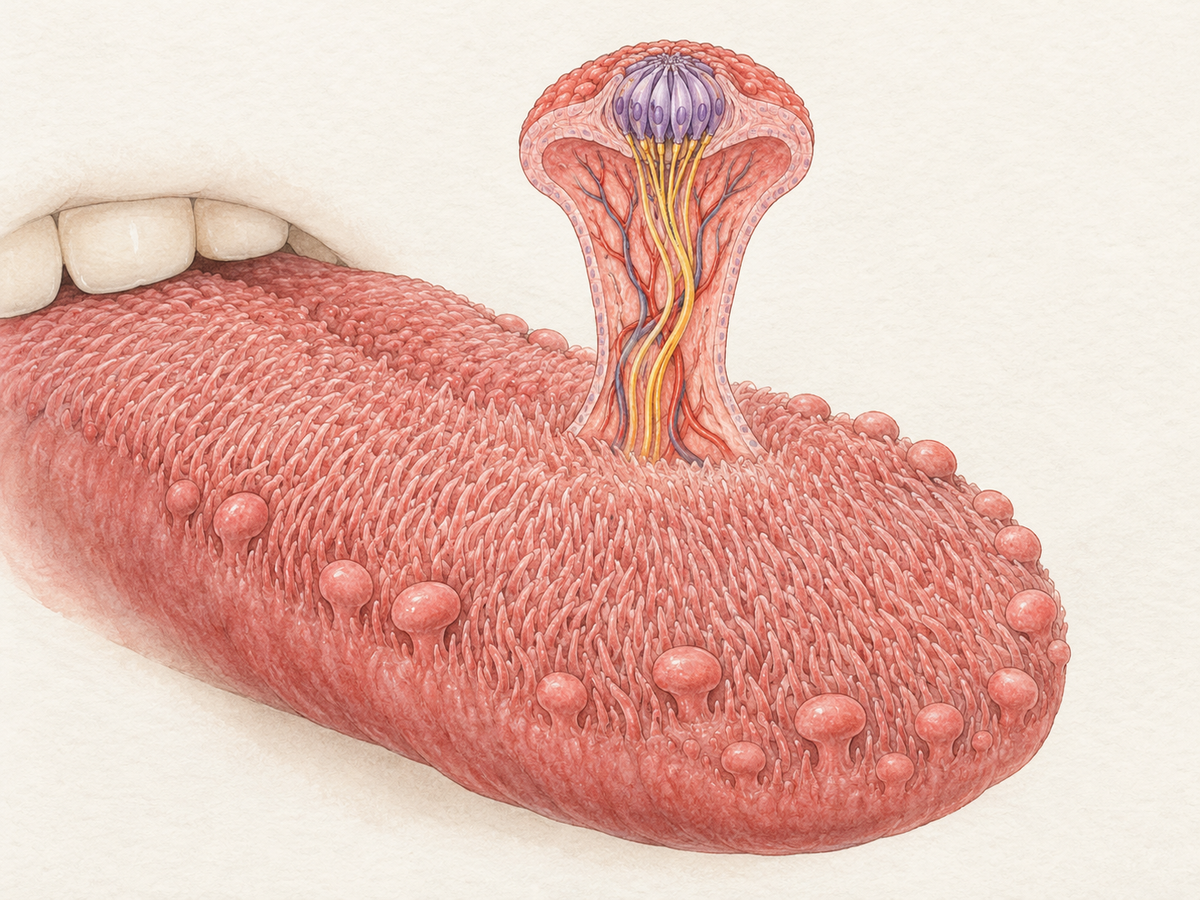
Fungiform papillae are the small mushroom-shaped bumps on the tip, sides, and front edges of your tongue. They often look like tiny pink or red dots. For most people, they are a normal part of the tongue, not an injury or disease.
Most red dots are harmless. If a bump or sore spot is still there after two weeks, see a dentist.
Where They Sit on Your Tongue
Your tongue is covered with many tiny bumps, but they are not all the same. Fungiform papillae cluster mainly at the tip, along the sides, and near the front edges. They sit among a much larger number of thread-like bumps called filiform papillae.
This pattern is not even. People have an estimated 200 fungiform papillae, and they are denser near the tip than in the middle, according to a review of fungiform papillae and taste. That is why the front of the tongue can look dotted with small red spots.
These dots are normal anatomy. You may see them even when nothing is wrong.
What They’re Made Of
Fungiform papillae are shaped like small mushrooms: a narrow base with a wider top. They have a thin outer tissue layer. Under that layer is a rich network of tiny blood vessels, which is why they look redder than the surrounding tissue, as explained in research on fungiform papillae.
On the upper surface, many fungiform papillae hold taste buds. Taste buds are clusters of cells that detect chemicals in food and drink. Nerve fibers connect those taste buds to the brain, which turns the signals into what you taste, according to a paper on the fungiform papilla as a sensory organ.
Not every single fungiform papilla holds taste buds all the time. Some carry none at a given time, while others may carry a few. That is part of why taste can vary from spot to spot.
How They Help You Taste
Fungiform papillae are one of several taste-sensing structures in your mouth. They help you detect sweet, salty, sour, bitter, and savory, also called umami.
But taste does not depend on these bumps alone. The average person has about 10,000 taste buds, and they are also found on other parts of the tongue and in areas such as the roof of the mouth and throat, according to a review of tongue physiology. The larger circular bumps at the back of the tongue, called circumvallate papillae, also hold many taste buds.
That is why a few sore or swollen fungiform papillae do not wipe out your sense of taste. Other papillae, taste buds, and nerves still help.
Why They Feel Sensitive or Look Swollen
A tender or puffy red bump is usually temporary. Common triggers include:
- Hot foods or drinks that burn the tongue
- Spicy or acidic foods
- Rough teeth, dental work, braces, or grinding that rubs the tongue
- Hormonal changes, such as those during a menstrual cycle or menopause
- Stress or poor sleep
- Mild local irritation or injury
Many of these triggers are described in a study on transient lingual papillitis. Dentists call temporary swelling of one or more fungiform papillae transient lingual papillitis, or TLP. It means harmless inflammation of tongue bumps that comes on quickly, may feel painful or tingly, and then goes away.
The sensation comes from nerve endings in and around the bump. Most cases settle within a few days, although some may take a few weeks, according to a clinical case report. Special treatment is usually not needed.
Fungiform vs Other Papillae
It helps to know what else is on the tongue so you can tell normal bumps from something unusual.
| Papillae type | What they look like | Where they sit | Taste buds? |
|---|---|---|---|
| Fungiform | Mushroom-shaped, pink or red dots | Tip, front, and sides | Yes |
| Filiform | Thread-like, tiny, and more numerous | Most of the tongue surface | No |
| Foliate | Leaf-like folds | Along the back sides | Yes |
| Circumvallate | Large circular bumps in a V shape | Back of the tongue | Yes |
Fungiform papillae stand out because of their mushroom shape and reddish color. Filiform papillae are the small thread-like bumps that give the tongue much of its texture. They do not carry taste buds, according to the same review. Circumvallate papillae are bigger and sit in a V shape at the back, with about 100 taste buds each.
When to See a Dentist
Most changes in tongue bumps are harmless. But get a dental check if you notice any of these:
- A bump or sore spot that does not improve after about two weeks
- Swelling that keeps getting bigger or does not go away
- Bleeding without a clear cause
- An ulcer or sore that lasts more than three weeks
- A white, red, or mixed red-and-white patch that persists
- A single bump that changes size, color, shape, or firmness
Cancer referral guidelines flag persistent mouth ulcers and red or white patches that last more than three weeks as red flags, according to NICE guidance on suspected oral cancer. These symptoms do not mean you have cancer. They simply mean a dentist should take a close look.
Persistent or unexplained mouth changes should be checked, because early detection is easier to treat if a serious condition is present, according to the British Dental Journal.
Everyday Tongue Care
You can be kind to your tongue without much effort.
- Brush or scrape gently. A soft toothbrush or tongue scraper can reduce tongue coating and odor. Move from back to front. Avoid scrubbing hard.
- Do not use tobacco. Smoking and other tobacco use can irritate the tongue. Limit heavy alcohol use too, because it can also irritate the lining of the mouth.
- Stay hydrated. Water helps keep your mouth moist and comfortable.
- Limit heavily spiced or very acidic foods if they bother you. You do not need to avoid them completely unless they clearly cause soreness.
- See a dentist if symptoms keep coming back. Repeated problems are a reason for a checkup, not a reason to worry.
Tongue cleaning can help reduce breath odor and tongue coating, according to a systematic review of mechanical tongue cleaning.
Treat your tongue gently, and let a dentist look at anything that does not heal.
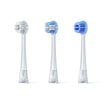
 Best Overall
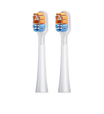
 Best Value
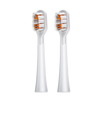
 Best for Sensitive Teeth
This article has been reviewed by an oral health professional for accuracy. It is intended to provide general educational information and should not be used as a substitute for personalized medical advice, diagnosis, or treatment. If you have questions or concerns about your oral health, please consult a dentist, physician, or other qualified healthcare provider.