Laughing gas is a blend of nitrous oxide and oxygen that you breathe through a small mask. It calms anxiety, raises your tolerance for pain, and helps you sit still during dental work—but it does not put you to sleep. You stay awake and able to respond, and for painful work you still need local numbing. The effects usually wear off within minutes after the gas is stopped.
Think of laughing gas as temporary relaxation. It is not the same as being numbed, and it is not general anesthesia.
How It Works in Your Brain and Body
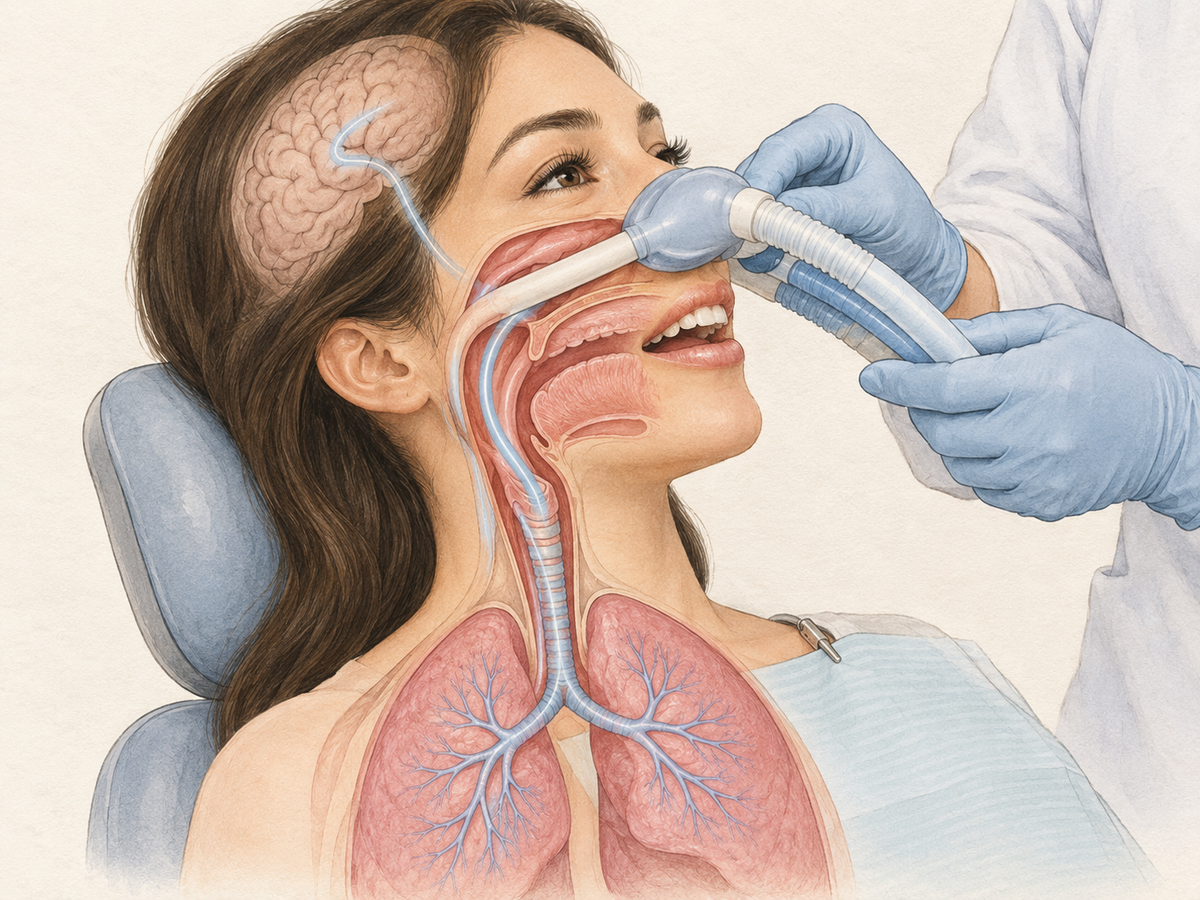
Laughing gas is a mix of nitrous oxide and medical oxygen. You breathe it in through a small mask that usually fits over your nose.
From your lungs, the gas moves into your bloodstream and reaches the brain quickly, often within about a minute clinical research on nitrous oxide. In the brain, it helps quiet anxiety messages and mildly changes how pain is felt research on nitrous oxide actions.
You do not fall asleep. You can hear the dental team, answer questions, and tell them if something feels off. That is why dentists sometimes call this conscious sedation, meaning you are calm but awake.
What It Feels Like During Treatment
Most people feel some combination of:
- Warmth
- Tingling in the lips, hands, or arms
- Heaviness or a floaty feeling
- Calmness or mild giggliness
- Sounds seeming slightly distant
These sensations are normal. Some people feel only a mild change, and that is also normal.
If the effect feels too strong, too weak, or sickening, tell the team right away. The dentist can adjust the amount of gas during the visit pediatric dental sedation guidance.
What It Does at the Dentist
Laughing gas is used to make dental care easier to tolerate. It can help:
- Reduce fear or nervousness
- Raise the pain threshold so discomfort feels less sharp
- Settle a strong gag reflex in some people
- Help patients sit still during longer appointments
It is often used for cleanings, fillings, and extractions. It is especially helpful for anxious adults, children, and people who need longer visits. Children usually need to be old enough to breathe through the nose and accept the mask European children’s dental guidance.
But laughing gas does not replace local numbing. For procedures that could hurt, such as drilling or extraction, you still need a numbing shot. Laughing gas is usually paired with local anesthesia rather than used alone review of nitrous oxide in emergency and dental care.
Safety and Side Effects
For most people, dental laughing gas is very safe. Common side effects can include:
- Headache
- Nausea
- Dizziness
- Sweating or shivering
These usually fade quickly once the gas is reduced or stopped review of nitrous oxide side effects.
Modern dental equipment is designed to mix nitrous oxide with adequate oxygen. The machines have safety features that stop the nitrous oxide if the oxygen supply is too low pediatric dental safety policy. The dental team also monitors you during treatment. Serious problems are rare when these safety steps are followed.
Who Should Avoid It
Some people need extra caution or may need to skip laughing gas. That includes people who:
- Are pregnant, especially in the first trimester
- Have severe breathing problems, such as uncontrolled asthma or COPD
- Have a known vitamin B12 deficiency
- Recently had ear, nose, throat, or eye surgery
- Have a very stuffy nose or an acute upper respiratory infection
These groups are listed as reasons to avoid nitrous oxide or use it only with special caution pediatric dental guidance.
Always share your full medical history, medicines, and supplements with the dentist. In some cases, another sedation method may be safer.
What Happens After It Wears Off
At the end of treatment, the dental team usually gives pure oxygen for a few minutes. This helps wash the laughing gas out through your lungs pediatric dental sedation protocol.
Because the gas clears quickly, most people feel close to normal within about five minutes review of nitrous oxide.
Most people remember the visit, though some may feel a little foggy for a short time. Many can return to their usual activities right away. Still, follow your dentist’s specific instructions, including any advice about driving or having someone with you.
Limits and Alternatives
Laughing gas is not a promise of zero pain. It does not work the same for everyone, and it is not general anesthesia. When used alone, it cannot reliably make you fully unconscious review of nitrous oxide and inhalation anesthetics.
Here is how it compares with other common options:
| Option | What it involves | What to know |
|---|---|---|
| Local anesthesia | A numbing shot in one area | Blocks pain but does not change alertness |
| Laughing gas | Gas breathed through a mask | Calms, wears off quickly, you stay awake |
| Oral sedation | Medicine taken by mouth before the visit | Stronger drowsiness, slower recovery |
| IV sedation | Medicine given through a vein | Deeper relaxation, close monitoring needed |
| General anesthesia | You are fully unconscious | Used for complex cases or certain patients |
The right choice depends on your anxiety level, health history, and the dental work you need. Ask your dentist which option fits you best.
This article has been reviewed by an oral health professional for accuracy. It is intended to provide general educational information and should not be used as a substitute for personalized medical advice, diagnosis, or treatment. If you have questions or concerns about your oral health, please consult a dentist, physician, or other qualified healthcare provider.