





Plain, unflavored sparkling water is not bad for most teeth, especially when compared with soda. The carbonation makes it mildly acidic, but lab research has found plain sparkling mineral water is far less likely to wear away enamel than soft drinks. The real risk comes from flavored or sweetened sparkling waters with added acids and sugar, and from sipping any acidic drink all day.
Quick rule: plain seltzer as an occasional drink is a tooth-safe choice. Check labels for citric acid, phosphoric acid, and sugar, and avoid sipping all day.
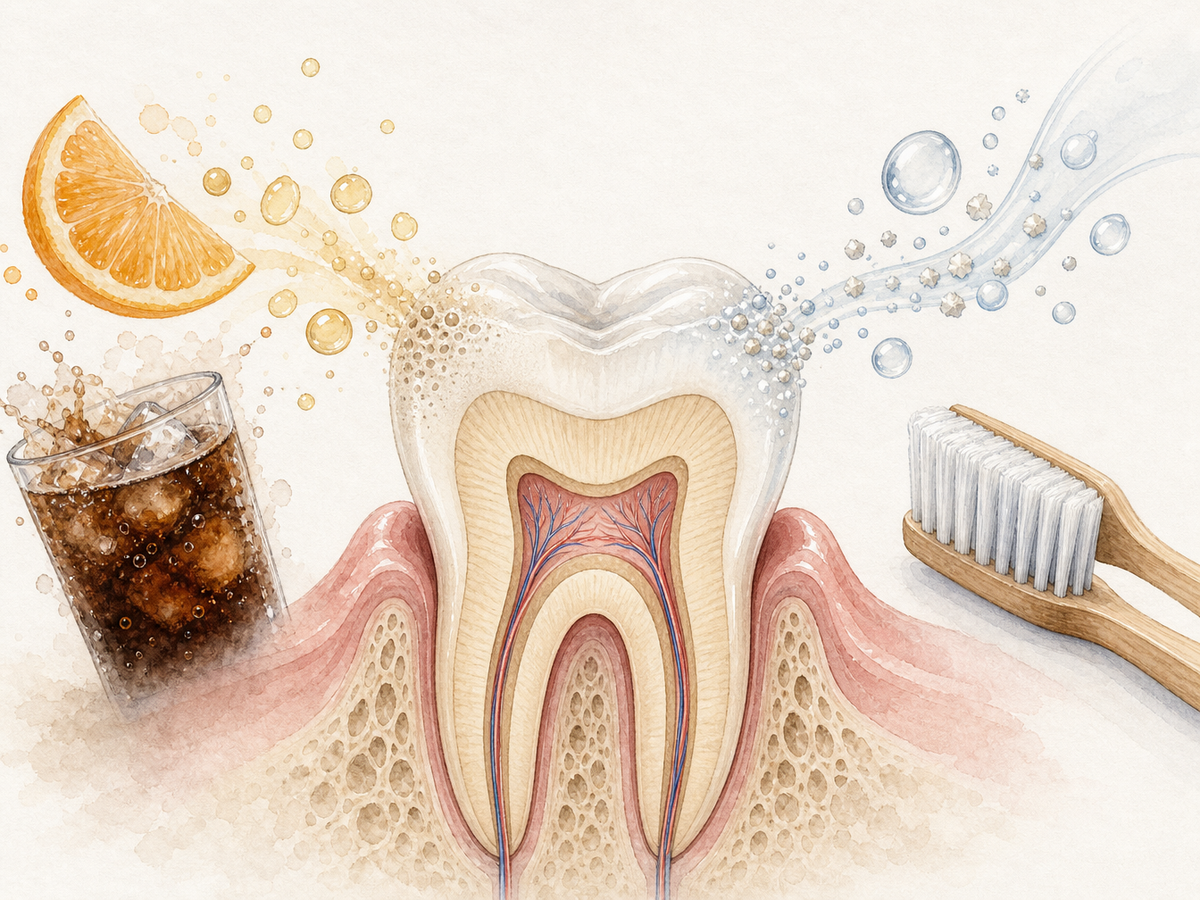
How Carbonation Affects Enamel
Tooth enamel is the hard outer layer of teeth. It can slowly lose minerals when it sits in acid too long.
Carbonation begins when carbon dioxide, the gas that creates bubbles, dissolves in water. That forms carbonic acid, a mild acid. So plain sparkling water is slightly acidic, but usually much less harsh than soda.
In a lab study, plain sparkling mineral waters dissolved enamel at levels about one hundred times lower than soft drinks. The bubbles themselves are not the main concern. The acid level is what matters.
Your saliva — spit — helps protect teeth. It washes away acids and supplies minerals that help enamel repair itself. This natural repair process is called remineralization. Because saliva does this job, an occasional plain sparkling water is unlikely to harm enamel on its own.
People with dry mouth have less of this protection, so they may need to be more careful with acidic drinks.
The Real Risk: Additives, Not Bubbles
“Sparkling water” covers a wide range of products. Plain seltzer or club soda is usually just water plus bubbles. But citrus-flavored, berry-flavored, or sweetened sparkling waters often include added acids and sugar.
Citric acid is a sour-tasting acid from citrus. Phosphoric acid is a strong-tasting acid used in some drinks. Both can make a drink more likely to wear away enamel. Sugar adds another problem because it feeds cavity-causing bacteria.
Labels may say “natural flavors,” but that phrase does not tell you the acid content. Many naturally flavored sparkling waters still contain added citric acid.
One study of flavored sparkling waters found pH values from 2.74 to 3.34, which is well into the acidic range. Their potential to erode enamel was similar to or greater than orange juice. Another lab study found that some flavored waters removed as much enamel as orange juice.
Sparkling Water vs. Soda vs. Plain Water
pH is a measure of acidity. Lower pH means more acidic. Plain water is close to neutral.
| Drink | Acidity | Sugar | Dental risk |
|---|---|---|---|
| Plain water | Neutral | None | Lowest |
| Plain sparkling water | Mildly acidic | None | Low, especially with meals |
| Flavored sparkling water | Often very acidic | Sometimes added | Can be similar to juice or soda; check label |
| Soda | Very acidic | Usually high | Highest |
Plain water is the best everyday choice. Plain sparkling water is a clear step below soda in dental risk. Soda is a double problem because it is highly acidic and usually sugary.
Swapping soda for plain sparkling water is a clear dental win. Just keep an eye on flavored varieties.
When Frequency Starts to Matter
How often and how long you sip matters more than a single glass.
A glass with a meal is a short acid exposure. Sipping from a bottle over hours keeps acid in contact with teeth again and again. Dental guidance says drinking an acidic drink in big gulps over a short period is less hazardous than sipping it slowly over a long period. Holding or swishing the drink in your mouth increases the risk.
Some factors raise the risk further:
- Dry mouth: less spit to buffer acid.
- Acid reflux: stomach acid comes up into the mouth.
- Existing enamel erosion: less protective enamel remains.
Occasional plain sparkling water is fine for most people. All-day sipping — especially of flavored or sweetened fizzy water — is not.
How to Drink It Without Worrying
You do not need to give up sparkling water. These habits can reduce the risk:
- Choose unflavored sparkling water more often.
- Drink it with meals instead of sipping between meals.
- Use a straw placed toward the back of your mouth so the liquid bypasses most teeth.
- Rinse or chase it with plain water afterward.
- Limit citrus or sweetened sparkling waters to occasional treats.
- Wait about 30 minutes before brushing after acidic drinks.
Acid can soften the enamel surface for a while. If you brush too soon, you may scrub away softened enamel. Waiting gives saliva time to help the enamel surface recover. Some dental guidance suggests waiting closer to an hour before brushing.
Signs to See a Dentist
Watch for these possible signs of enamel erosion:
- Tooth sensitivity: teeth hurt or feel tender with cold, hot, sweet, or acidic foods and drinks.
- Yellowing: teeth look more yellow as the white outer layer thins.
- Translucent edges: the biting edges of front teeth look see-through or clear.
- Rough or pitted teeth: surfaces feel uneven or have small hollows.
These signs can have several causes, so do not try to diagnose them yourself. A dentist can examine your teeth and explain what is happening.
Also see a dentist if you have a history of acid reflux or an eating disorder. Stomach acid can wear away teeth, and those conditions may need medical care along with dental care. At-home adjustments alone may not be enough.
 Best Overall
 Best Value
 Best for Sensitive Teeth
This article has been reviewed by an oral health professional for accuracy. It is intended to provide general educational information and should not be used as a substitute for personalized medical advice, diagnosis, or treatment. If you have questions or concerns about your oral health, please consult a dentist, physician, or other qualified healthcare provider.