
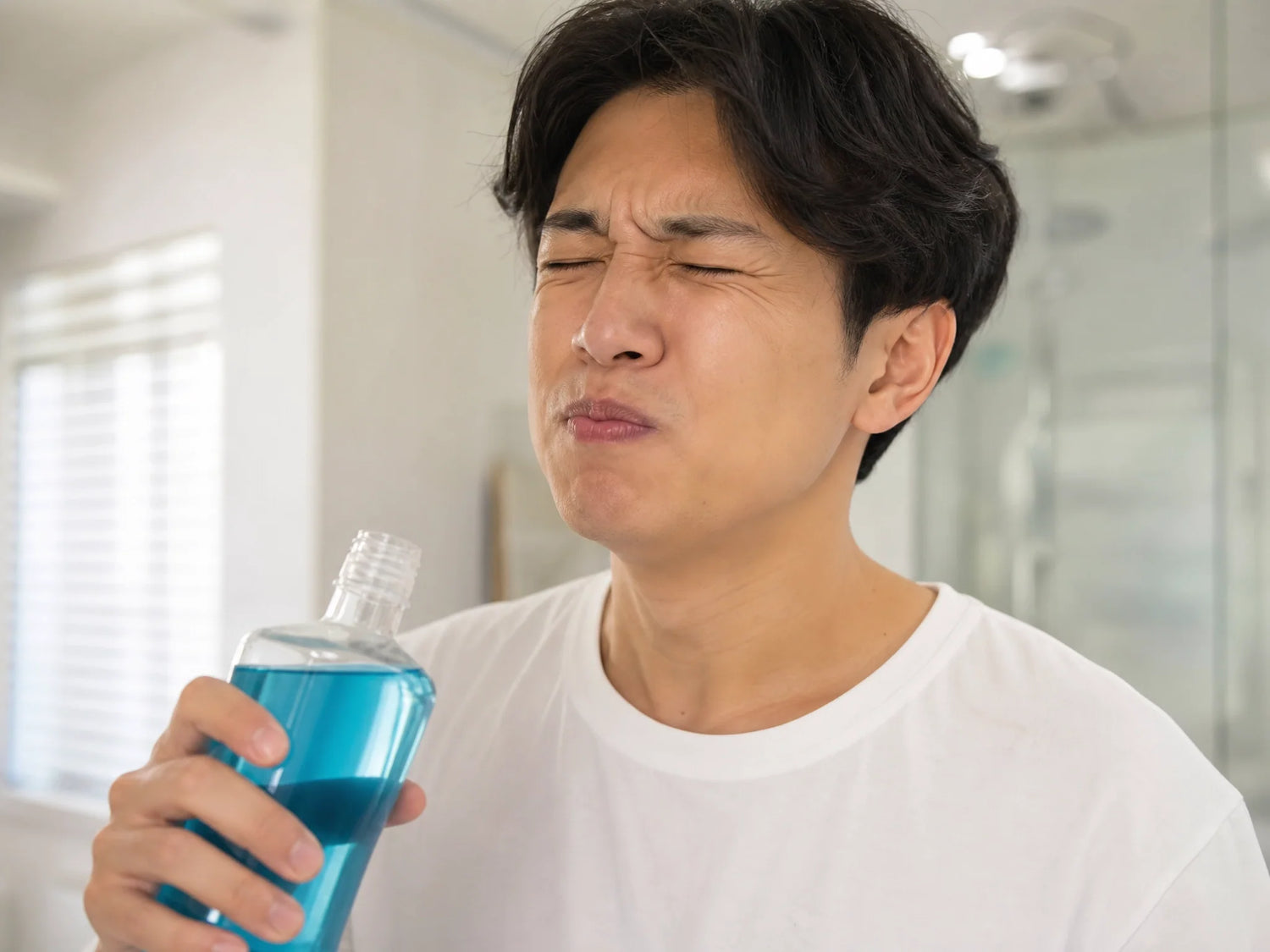
That familiar sting isn’t a sign of a deep clean — it’s a chemical reaction between ingredients and your mouth’s sensitive tissues. Here’s what’s really happening, and how to get a truly clean mouth without the burn.

What Exactly Is the Burning Sensation?
It’s that sharp tingle, smarting, or downright hot feeling that hits your cheeks, gums, and tongue the moment liquid touches them. For some, it’s a mild buzz; for others, it’s a startling pain.
The sensation isn’t imaginary — your oral mucosa is packed with sensory nerves that react instantly to chemical irritants. What you perceive as burn is those nerves firing a warning signal, not a measure of cleanliness.
Why Does Mouthwash Burn? Decoding the Main Irritants
The sting comes down to a handful of common ingredients. Their job is to fight germs, but they also happen to be tough on soft tissue.
Alcohol (Ethanol) – The Primary Culprit Behind the Sting
Alcohol (ethanol) is still found in many mouthwashes at concentrations between 18% and 26% — roughly the same as a glass of wine. But here’s the twist: it’s not the cleaning powerhouse you might think.
Many commercial mouthwashes contain between 18-27% alcohol — roughly the same as a glass of wine. But the alcohol isn’t there for its germ-killing power; it’s used as a solvent and preservative.
That high concentration dissolves the natural lipids that protect your oral lining, causes vasodilation, and dehydrates cells. The result? Your sensitive inner cheek tissue gets stripped of its protective mucous layer, exposing nerve endings directly to irritants. A study published in the Journal of International Society of Preventive & Community Dentistry confirms that the presence of alcohol in mouthwash often triggers that burning sensation.
Menthol – The “Cooling” Agent That Burns
Menthol doesn’t actually drop tissue temperature — it activates TRPM8, a cold-sensitive ion channel on your nerve endings. That’s why you feel an icy sensation. But at high concentrations, menthol also co-activates heat receptors (like TRPV1), creating a paradoxical burning-cool feeling.
- You feel cold first, then a wave of heat
- High menthol levels overwhelm sensory nerves, especially if your mouth already has micro-wounds from brushing
- Even if you like the tingle, it’s a form of mild chemical irritation
Other Harsh Actors (Chlorhexidine, Peroxide, Essential Oils)
Several other ingredients can turn a simple rinse into an uncomfortable experience.
| Ingredient | Typical Use | Why It Burns |
|---|---|---|
| Chlorhexidine | Prescription antimicrobial for gum disease | Chemically irritates soft tissue; a high percentage of users report burning, which usually stops after discontinuing use. |
| Hydrogen Peroxide | Whitening mouthwash | Releases oxygen bubbles that sting any tiny abrasions or sensitive spots. |
| Essential oils (thymol, eucalyptol) | Antigingivitis formulas | Phenolic compounds activate heat and cold receptors; when combined with alcohol, irritation intensifies. |
| Sodium Lauryl Sulfate (SLS) | Foaming agent | Strips protective mucin, increases tissue permeability, and makes nerves more vulnerable. |

When Should That Burn Worry You? (Normal Sting vs. Dental Red Flag)
A brief, mild tingle that fades within seconds is usually harmless — just nerves reacting to strong flavors. But persistent or intense pain isn’t something to ignore.
See a dentist if you notice:
- Burning that lasts for hours after spitting out the rinse
- White patches, blisters, or peeling skin inside your cheeks
- Swelling of the gums, tongue, or throat
- Burning accompanied by a metallic taste or numbness
- Discomfort that worsens with each use, even after switching products
If you have gingivitis, mouth ulcers, or even tiny cuts from flossing, those breaks in the epithelium let chemicals reach deeper nerve endings — amplifying the sting dramatically.
How to Find a Mouthwash That Doesn’t Burn (Your Gentler Options)
You don’t have to choose between comfort and a truly clean mouth. Alcohol-free formulas can be equally effective at controlling plaque and freshening breath — without the pain.
What to Look for on the Label (Ingredients You Actually Want)
Do look for: - “Alcohol-free” clearly stated on the front - Xylitol or glycerin — they soothe and moisturize - Aloe vera or chamomile — natural calming agents - Cetylpyridinium chloride (CPC) — a gentle antimicrobial that fights bad breath without harsh burn - Fluoride — still protects against cavities
Avoid or be cautious of: - Alcohol (ethanol, SD alcohol) - High-concentration menthol or thymol if you’re sensitive - Sodium Lauryl Sulfate (SLS) — it can erode the protective mucin layer - Strong essential oil blends if your mouth already feels raw

Where to Start: Gentle Mouthwash Types for Every Need
| Oral Goal | Best Betypes | Key Soothing Ingredients |
|---|---|---|
| Cavity prevention | Alcohol-free fluoride rinse | Fluoride, xylitol |
| Gum health | Mouthwash with CPC or aloe | Cetylpyridinium chloride, aloe vera |
| Dry mouth relief | Moisturizing formula | Glycerin, xylitol, aloe, no alcohol |
| Natural/holistic approach | Herbal-based rinse | Organic peppermint oil, baking soda, chamomile |
DIY Temporary Rinse: How to Soothe the Burn Right Now
If you already have a stinging mouth and need immediate relief before you can buy a gentler product, try:
- Mix 1/2 teaspoon of salt in 8 ounces of warm water, or 1 teaspoon of baking soda in 8 ounces of warm water.
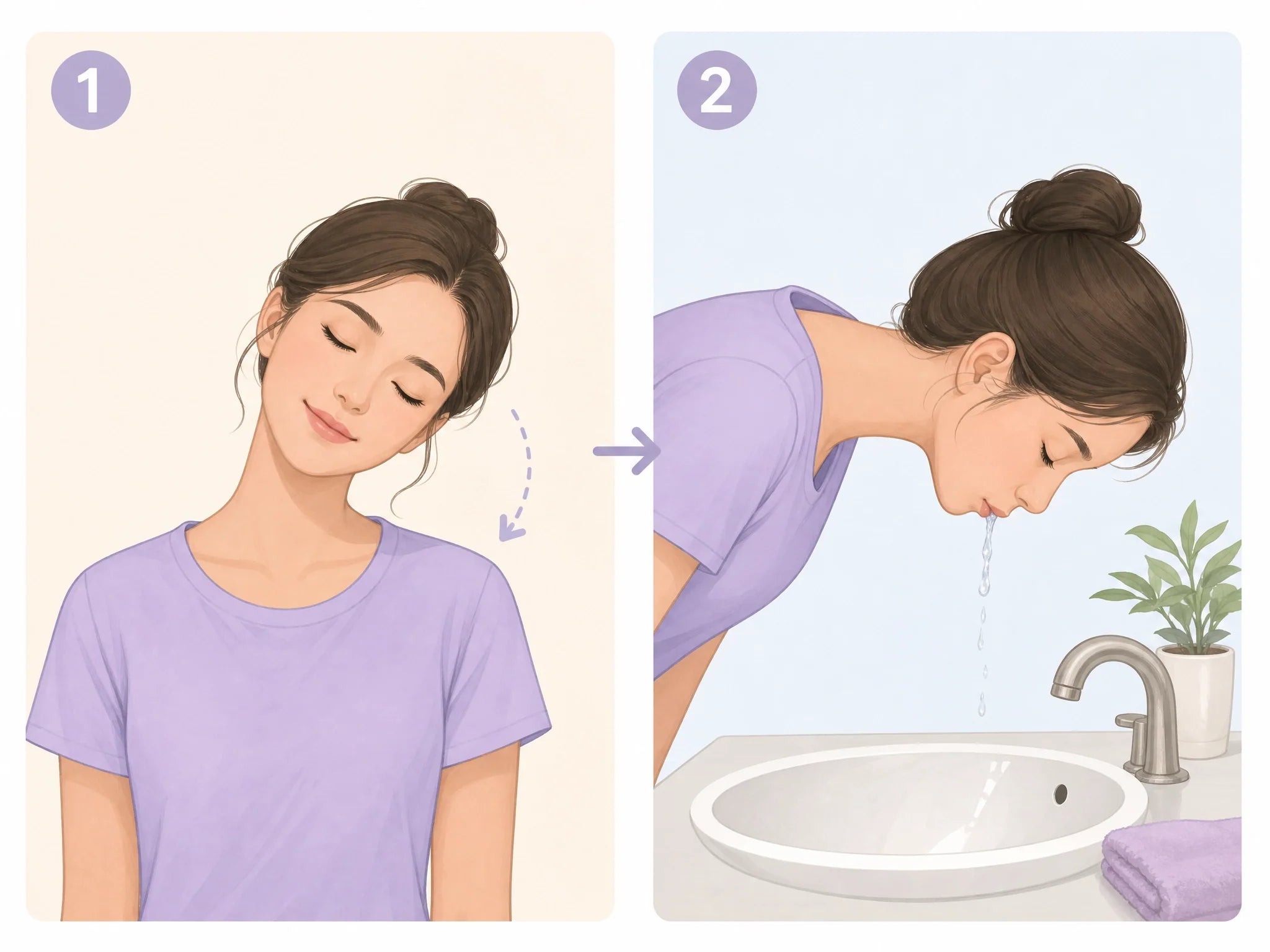
- Swish gently for 30 seconds — don’t be aggressive.
- Spit out. Do not swallow.
- Repeat up to 2–3 times per day, but only as a temporary solution.
Caution: This is a soother, not a long-term mouthwash replacement. It lacks fluoride and other protective ingredients. Never use undiluted essential oils to numb the burn — they can make things worse.
How to Use Mouthwash the Right Way to Avoid Unnecessary Burn
Tiny tweaks can make a big difference in how your mouth reacts:
- Don’t rinse longer than 45–60 seconds. Prolonged contact ramps up irritation without proven added benefit.
- Never dilute a mouthwash with water unless the label specifically says to. Dilution can actually make some formulas more acidic, increasing the sting.
- Wait at least 20 minutes after brushing or flossing before using mouthwash. Fresh micro-wounds from vigorous cleaning make you far more sensitive to burn. Switching to a gentle yet effective toothbrush like the RANVOO AirJet X5 — which uses patented bubble jet technology to clean deeply without scraping gum tissue — can prevent those micro-wounds altogether, letting you rinse immediately after brushing with zero sting.
- Do not rinse with water afterward. That traps the active ingredients against your tissue longer and can concentrate irritants.
- Always follow the dosage instructions. More isn’t better; a capful is enough.
The Balance: Getting a Clean Mouth Without the Pain
The burn was never proof that mouthwash is working. It’s just proof of a chemical mismatch between the product and your body’s natural defenses. Alcohol-free, thoughtfully formulated rinses deliver plaque reduction, fresh breath, and gum protection — without making you wince. If you’ve been silently enduring the sting, it’s time to make the switch. Your mouth will thank you with a calm, fresh smile.



Leave a comment
This site is protected by hCaptcha and the hCaptcha Privacy Policy and Terms of Service apply.