
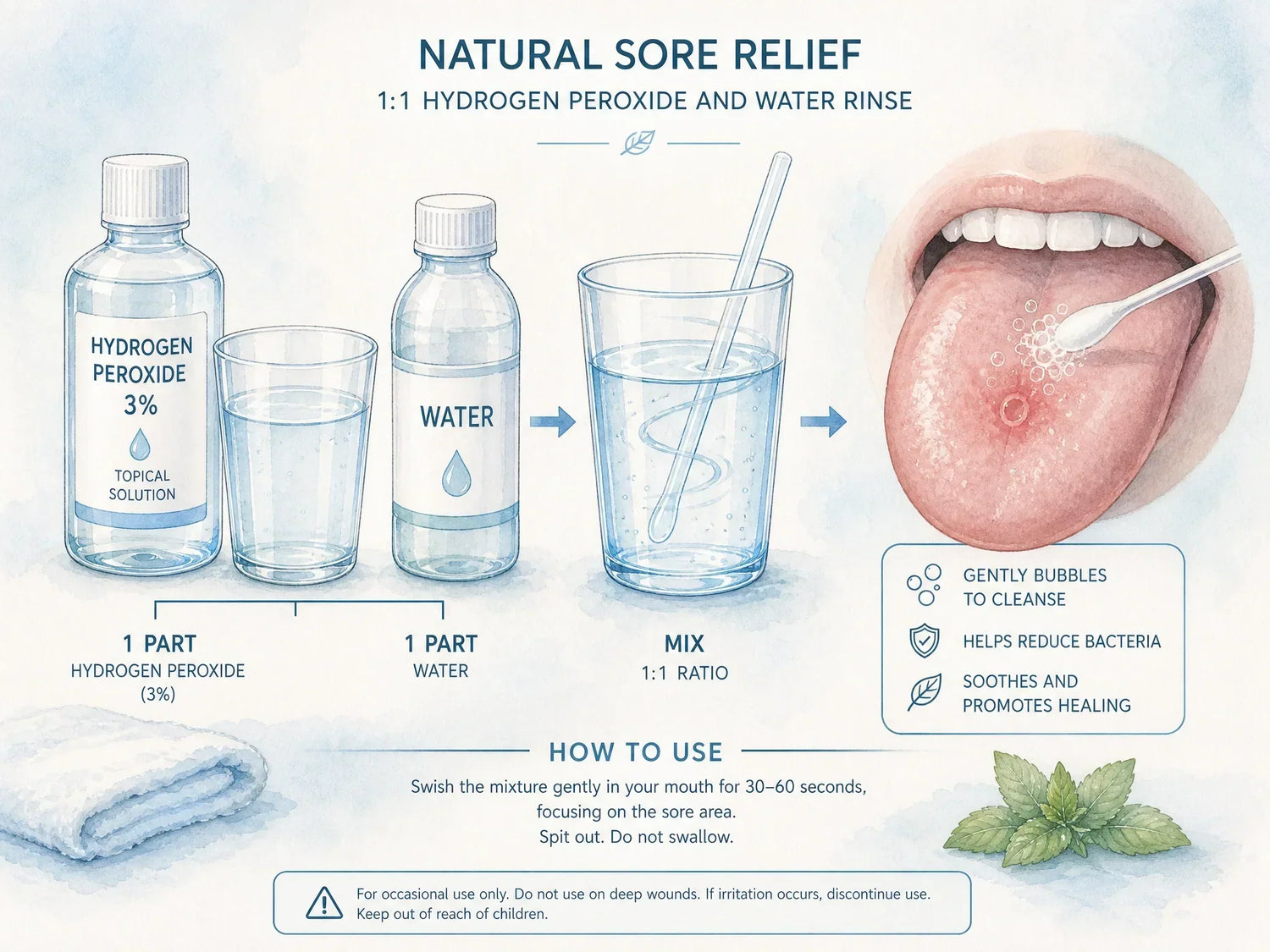
TL;DR: A diluted hydrogen peroxide mouth rinse can gently cleanse canker sores and minor mouth wounds by releasing oxygen to flush away debris and bacteria. This creates a cleaner environment that supports your body’s natural healing—not an instant cure. Dilute 3% food-grade peroxide with an equal amount of water (1:1) to get a safe 1.5% solution, or use a pre-mixed oral rinse. Swish for 30–60 seconds once or twice daily, then spit. Mild foaming and fleeting stinging are normal. Stop if the pain intensifies or the wound looks deep.

What Hydrogen Peroxide Does for Mouth Sores
A mouth sore—whether it’s a canker sore, a cheek bite, or irritation from a sharp food—hurts because the raw tissue is exposed to the bacteria, enzymes, and acids that live in your mouth. Hydrogen peroxide brings two helpful properties to that sensitive spot: antiseptic action and oxygen-driven debris removal.
When hydrogen peroxide (H₂O₂) contacts the wound, it releases oxygen free radicals that break apart bacterial cell walls. At the same time, the classic foaming you see is oxygen bubbles physically lifting away dead cells, tiny food particles, and bacterial biofilm from the ulcer’s surface. It’s a mild, chemical-mechanical debridement.
This isn’t a cure-all. A review of treatments for chronic recurrent oral aphthous ulcers noted that topical hydrogen peroxide 0.5% solution significantly reduced pain after one day, but did not speed up the healing itself. What it does well is keep the sore clean so that your body’s own repair process can happen without added bacterial interference. Major health sites like the Mayo Clinic also list diluted hydrogen peroxide as a common, accessible option for cleansing canker sores.
Think of the rinse as a gentle reset button: it temporarily reduces the microbial load and clears loose debris. That’s why you’ll often feel a brief moment of relief just after rinsing—the raw nerve endings are no longer bathed in as many irritating particles.
Safety First: Dilute Properly
The brown bottle of 3% hydrogen peroxide you might have at home is not safe to use undiluted in your mouth. Full-strength hydrogen peroxide can burn delicate oral tissue and, with prolonged contact, even damage the cells that help your gums rebuild.
- Standard household grade: 3% H₂O₂—too strong for direct use inside the mouth.
- Common over-the-counter mouth rinse strength: 1.5% hydrogen peroxide (or lower). Some ready-to-use products are already buffered and flavored at this concentration.
- Dilution rule of thumb: To turn 3% food-grade peroxide into a 1.5% oral rinse, mix equal parts of the peroxide and clean water. One tablespoon peroxide + one tablespoon water, for example, gives you a safe rinse.
Staying at or below 1.5% matters. Laboratory research on periodontal cells showed that 3% hydrogen peroxide can be cytotoxic to fibroblasts—the very cells that knit your gum tissue back together. Meanwhile, human safety data summarized by the European Commission noted that a 1.5% hydrogen peroxide rinse used four times a day for seven days caused no treatment-related adverse effects.
If you have a pre-made hydrogen peroxide mouthwash that already lists 1.5% on the label, you don’t need to dilute further. If you’re using a self-mixed solution, always dilute just before use—peroxide breaks down quickly when exposed to light and air.
Step-by-Step Rinse Instructions
When a sore is raw, every movement in your mouth can feel amplified. Following a precise, gentle routine helps you get the benefit with minimal discomfort:
- Measure your rinse. Pour about 10 mL (roughly one capful or two teaspoons) of the diluted 1.5% solution into a small cup.
- Swish gently. Take the liquid into your mouth and swish it over the sore area for 30 to 60 seconds. No need to swish vigorously—let the foam do the work.
- Spit, don’t swallow. Hydrogen peroxide is not meant to be ingested. Spit into the sink. You may see foam that looks like bubbly saliva; that’s normal.
- Optional plain-water follow-up. If the taste lingers or feels strange, you can rinse your mouth with plain water afterward. Just don’t scrub the sore when spitting.
- Limit frequency. Use the rinse once or twice daily at most. Overusing it can dry out or irritate the mucous membrane, which slows healing.
- Timing helps. Rinsing after a meal clears food particles that might otherwise sit on the sore. A bedtime rinse can give the cleaned wound several uninterrupted hours of rest.
What You’ll Feel (and What’s Normal)
The first few seconds can be surprising. Here’s what’s expected—and what’s a signal to stop.
- Foaming: The bubbling you see is the oxygen release. It can feel fizzy on the sore, almost like a mild carbonated drink. This is a sign the rinse is working.
- Mild stinging: A brief, light stinging sensation is typical. It often means the wound is being debrided. The review of aphthous ulcer treatments noted that even a lower 0.5% solution brought noticeable pain reduction after a day, but the initial contact may still tingle.
- Temporary whitening: The sore or the tissue right around it may briefly turn whitish. This is caused by the superficial oxygen effect and is not tissue damage. It fades quickly after you rinse with water.
- When to worry: If you feel a sharp, burning pain that persists longer than a few seconds, the solution is likely too strong or the sore is too deep and raw. Rinse your mouth immediately with plain water and don’t use the peroxide again until you’ve consulted a dentist.
When to Skip the Rinse
Hydrogen peroxide is not appropriate for every mouth wound. There are clear lines where home care ends and professional care begins.
Stop using the rinse and see a dentist if: - The wound is deep, gaping, or has visible tissue flaps. - There are signs of spreading infection: increasing redness, swelling, warmth, or a fever. - The sore bleeds heavily and doesn’t stop with gentle pressure. - Pain worsens significantly after each use instead of gradually easing. - The sore hasn’t started to heal or has grown larger after 7–10 days.
If you have a known sensitivity or allergic reaction to hydrogen peroxide, avoid it entirely. And if you’re unsure whether your mouth sore is a common canker sore or something else (like a symptom of a systemic condition), your dentist’s evaluation is the safest next step.
Making It Part of Your Routine
For the rinse to help without irritating the tissue, think of it as a short-term cleansing step—not a daily mouthwash forever.
- Pair it with a gentle hygiene rhythm. You might rinse after breakfast and just before bed, precisely when you brush your teeth.
- Don’t overdo it. Twice a day is the ceiling. Frequent, repeated rinsing can keep the wound too damp and disturb the delicate fibrin layer that forms to protect the healing tissue.
- Combine with saltwater rinses on alternating sessions. A warm saline rinse (half teaspoon salt in a cup of water) is another mild wound cleanser. You could use saltwater in the morning and diluted peroxide at night, or just pick one that feels most comfortable.
- Brush carefully during healing. When you have a raw sore, using a sonic toothbrush lets you clean around the area without the heavy scrubbing a manual brush might require. The automated motion reduces the tendency to press hard near a painful spot, and that means less chance of re-injuring the delicate healing rim.
Patience is hard when every sip of water or bite of food stings, but true recovery takes a few days. The peroxide rinse is a support crew—it sets the stage for your body to rebuild the tissue.

A Note on Preventing Future Sores
Not all mouth sores are preventable, but many are triggered by minor tissue injury. Aggressive brushing is an often-overlooked culprit. Adopting an electric toothbrush can help you maintain excellent plaque control while naturally encouraging a lighter touch, steering you away from the overzealous scrubbing that frequently damages the soft lining of the mouth. Paired with a clean, well-hydrated mouth, that simple shift can reduce how often you face the discomfort of an ulcer in the first place.


Leave a comment
This site is protected by hCaptcha and the hCaptcha Privacy Policy and Terms of Service apply.