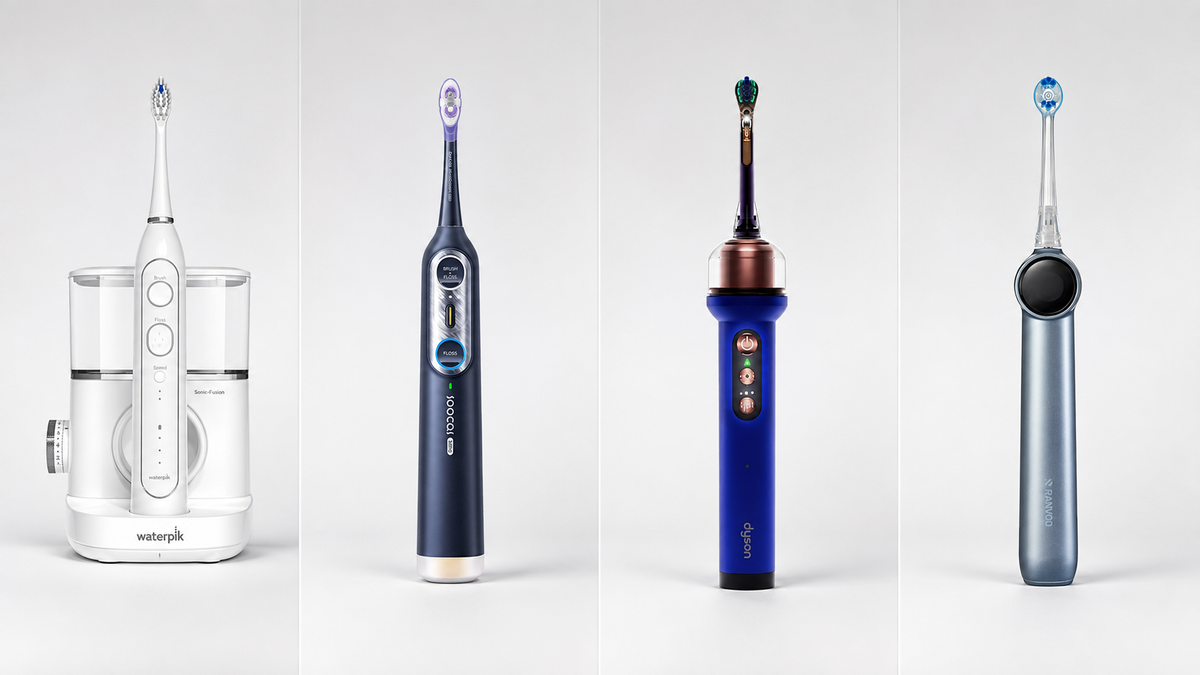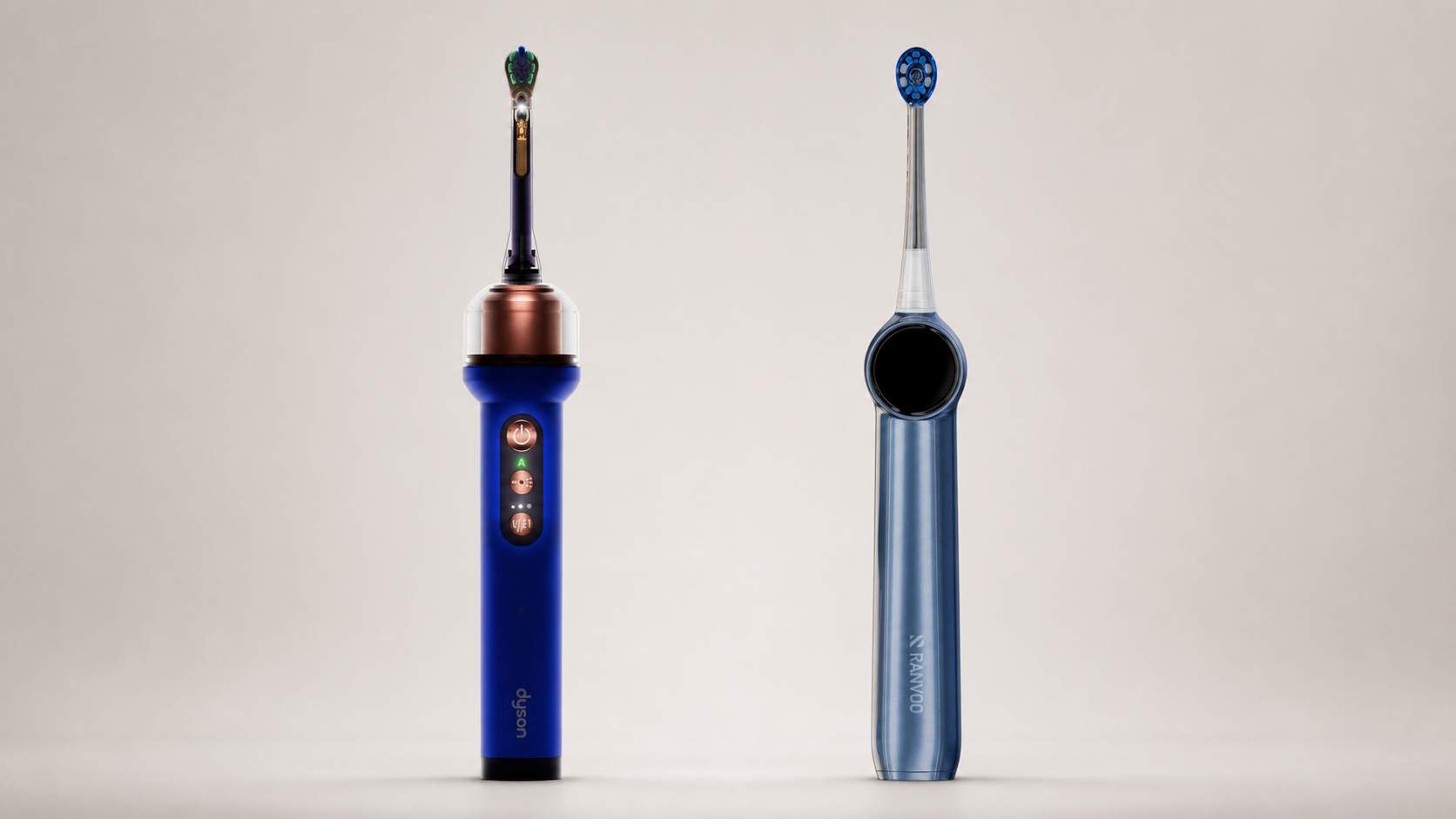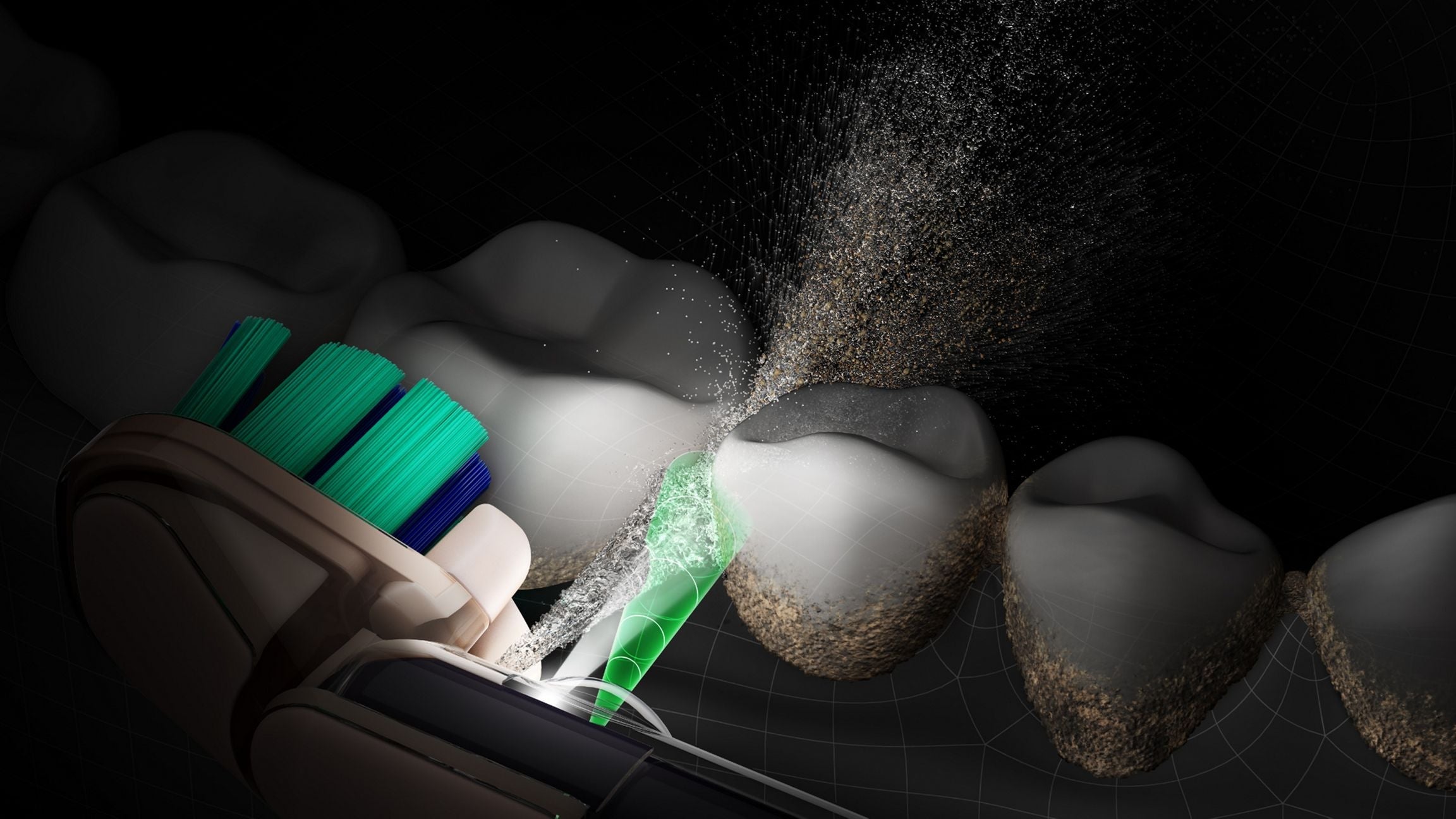
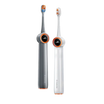
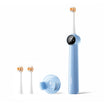




Most people know they should brush for two minutes.
Far fewer know how the brushing motion should change depending on the toothbrush.
The biggest mistake? Using an electric toothbrush exactly like a manual one.
The Quick Answer
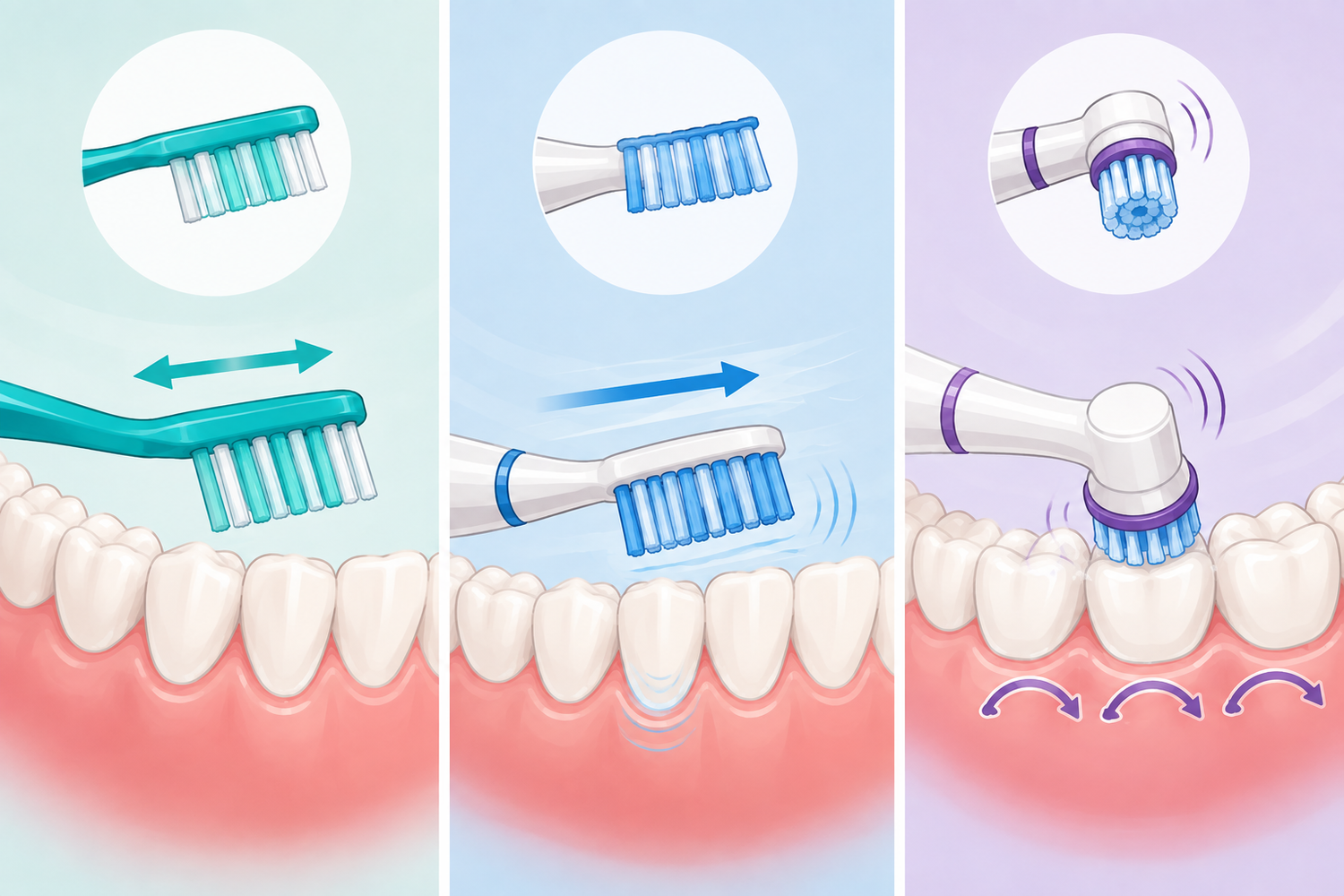
Manual toothbrush: You create the cleaning motion. Use short, gentle strokes at about a 45° angle toward the gumline.
Sonic toothbrush: The brush creates the high-speed motion. Hold it around 45° toward the gumline and slowly glide it along the teeth.
Oscillating-rotating toothbrush: Let the round head clean one tooth at a time. Pause briefly on each surface, then move to the next tooth.
For all three, aim for two minutes, twice a day, with fluoride toothpaste.
First: Stop Scrubbing Your Electric Toothbrush
This is the rule that matters most.
With a manual toothbrush, your hand creates the brushing action.
With an electric toothbrush, the motor already creates that action.
So aggressive back-and-forth scrubbing is unnecessary. Instead, your job is mainly to position, guide, and control the pressure of the brush.
Think of it this way:
Manual = brush.
Sonic = glide.
Oscillating = guide tooth by tooth.

1. Best Manual Toothbrushing Technique
For a standard manual toothbrush, dental guidance commonly recommends positioning the bristles at approximately a 45° angle toward the gumline and using gentle, short strokes.
How to do it
1. Start at the gumline
Angle the bristles about 45° toward where your teeth meet your gums.
The gumline matters because plaque commonly accumulates around this margin.
2. Use short, gentle strokes
Move the toothbrush in small back-and-forth or circular motions.
Do not use long, aggressive horizontal strokes.
3. Follow a fixed route
Clean:
- Outer surfaces
- Inner surfaces
- Chewing surfaces
- Back molars
A consistent route makes it less likely that you accidentally skip an area.
4. Change the angle for your front teeth
For the inside of the upper and lower front teeth, hold the brush more vertically and use several gentle up-and-down strokes.
The key mistake
Don't brush harder to clean better.
More pressure does not automatically mean more plaque removal. What matters is getting the bristles into the right places and covering every surface consistently.
2. Best Sonic Toothbrush Technique
A sonic toothbrush usually has an elongated head similar to a manual toothbrush, but the bristles move rapidly from side to side.
That means you do not need to create the brushing motion yourself.
The Best Sonic Technique: Slow Glide
1. Place the bristles at about 45° toward the gumline
Let the edge of the bristles contact both the tooth surface and gumline.
2. Turn the toothbrush on after positioning it
This helps keep toothpaste from spraying around your bathroom.
3. Apply light pressure
Don't flatten the bristles against your teeth.
Let the vibration do the cleaning.
4. Slowly glide along the gumline
This is where sonic brushing differs most from manual brushing.
Don't rapidly scrub.
Instead:
Position → slowly glide → reposition → continue.
5. Clean all three surfaces
Move through:
- Outer surfaces
- Inner surfaces
- Chewing surfaces
Behind the front teeth, tilt the handle more upright and use overlapping vertical passes.
Sonic Toothbrush Shortcut
Remember:
45° + light pressure + slow glide.
Not:
press + scrub + rush.
3. Best Oscillating-Rotating Toothbrush Technique
Oscillating toothbrushes usually use a small, round brush head that moves back and forth around each tooth.
Because the head is designed to closely surround an individual tooth, the technique is different from a sonic toothbrush.
The Best Oscillating Technique: Tooth by Tooth
1. Start at the gumline
Position the head against the first tooth, following the shape of the tooth and gumline.
2. Hold it there briefly
Don't immediately drag the brush across several teeth.
Let the oscillating head clean the surface.
3. Move to the next tooth
Guide the brush slowly:
Tooth → pause → next tooth → pause.
4. Follow the shape of every tooth
Clean the:
- Outside
- Inside
- Chewing surface
Then continue systematically around the mouth.
5. Let the round head do the movement
Your hand moves the brush from location to location.
The motor performs the actual cleaning movement.
Oscillating Toothbrush Shortcut
Remember:
Place → pause → move.
Not:
scrub → scrub → scrub.
Sonic vs. Oscillating: The Technique Is Not the Same
This is where many electric-toothbrush guides become too vague.
They simply say:
"Let the electric toothbrush do the work."
That's correct—but incomplete.
The ideal hand movement is slightly different.
| Toothbrush | Your Main Movement |
|---|---|
| Manual | Short brushing strokes |
| Sonic | Slow glide along the teeth |
| Oscillating-rotating | Guide tooth by tooth |
| Pressure | Gentle for all three |
For a sonic brush, think continuous slow movement.
For an oscillating brush, think individual tooth positioning.
How Much Pressure Should You Use?
Less than many people think.
With an electric toothbrush, especially, there is little reason to press aggressively.
If your toothbrush has a pressure sensor, treat it as a coach: when it warns you, reduce pressure rather than trying to "clean harder."
The goal is to keep the bristles in contact with the teeth and gumline without forcing them firmly against the surface.
How Long Should You Brush?
The simple target:
2 minutes.
2 times per day.
A practical electric-toothbrush routine is:
- Upper right: 30 seconds
- Upper left: 30 seconds
- Lower right: 30 seconds
- Lower left: 30 seconds
But don't become obsessed with the timer.
Two minutes with poor coverage is still poor brushing.
The real goal is to clean every accessible tooth surface and the gumline.
Electric vs. Manual: Which Technique Is Easier?
Manual toothbrushes can absolutely clean teeth effectively.
The problem is that the user must control:
angle + movement + pressure + coverage + time.
Electric toothbrushes automate part of that work.
Research comparing powered and manual toothbrushes has found that powered toothbrushes can provide modest improvements in plaque and gingivitis reduction.
In practical terms:
Electric toothbrushes can make good technique easier—but they don't make technique irrelevant.
5 Toothbrushing Mistakes to Stop Making
1. Scrubbing With an Electric Toothbrush
The motor already provides the cleaning motion.
Guide it instead.
2. Pressing Too Hard
More pressure isn't the same as better cleaning.
Use light, controlled contact.
3. Brushing Only the Visible Surfaces
Don't forget:
inside surfaces + back molars + gumline + chewing surfaces.
4. Moving Too Quickly
Whether you're gliding a sonic brush or positioning an oscillating brush, give the bristles enough time to actually contact each area.
5. Brushing Without a System
Random brushing makes missed areas more likely.
Pick a route and repeat it every day.
The Best Toothbrushing Technique in One Minute
If you only remember one section from this article, remember this:
Manual Toothbrush
45° to the gumline → gentle short strokes → cover every surface.
Sonic Toothbrush
45° to the gumline → light pressure → slowly glide → don't scrub.
Oscillating Toothbrush
Position on one tooth → pause briefly → move to the next → don't scrub.
And whatever toothbrush you choose:
Brush for about two minutes, twice a day, using fluoride toothpaste.
Which Is the Best Electric Toothbrushing Technique?
There isn't one universal electric-toothbrush motion because sonic and oscillating toothbrushes work differently.
For most sonic toothbrushes, the easiest rule is:
Slowly glide the brush along the gumline and tooth surfaces.
For a small round oscillating-rotating head:
Guide the brush tooth by tooth and let it pause briefly on each surface.
The technology can create thousands of movements for you.
Your job is much simpler: put those movements in the right place.
Sources
For further reading and clinical guidance:
- American Dental Association (ADA) — Toothbrushes and recommended brushing practices
- Philips Sonicare — Guidance on using sonic electric toothbrushes
- Oral-B — Guidance on oscillating-rotating electric toothbrush technique
- Cochrane — Systematic review comparing powered and manual toothbrushes
If you have braces, implants, significant gum recession, periodontal disease, recent dental surgery, or persistent bleeding or sensitivity, ask your dentist or dental hygienist whether your brushing technique needs to be modified for your specific condition.